Annual Report 2025
The College of Health Professions is pleased to share highlights that showcase the extraordinary work of our faculty, staff, students, and alumni. Our College does real work that impacts health care, the economy, and the vitality of our communities. Learn more about how the College of Health Professions at Wichita State is Leading Change in Health Care Education.
 As we reflect on 2025, the College of Health Professions stands at an important moment
of growth and transformation. This year has been defined by collaboration, innovation,
and a shared commitment to strengthening the health of our communities through expanded
educational opportunities, increased research and development activities, and a commitment
to providing care in schools and clinics.
As we reflect on 2025, the College of Health Professions stands at an important moment
of growth and transformation. This year has been defined by collaboration, innovation,
and a shared commitment to strengthening the health of our communities through expanded
educational opportunities, increased research and development activities, and a commitment
to providing care in schools and clinics.
Construction on the Wichita Biomedical Campus continues to advance, reshaping the landscape of downtown Wichita and laying the groundwork for a new era of healthcare education and service. What is emerging is more than a building—it is the vision for how education, clinical care, research, and industry will converge to meet the needs of our state.
We also advanced the work of the Institute for Rehabilitation Medicine and Assistive Technology, a partnership that unites the College of Health Professions with the College of Engineering, Industry and Defense Programs, and clinical leaders including Ascension Via Christi’s Rehabilitation Hospital, Heartspring, and the Robert J. Dole VA Medical Center. This collaboration is accelerating breakthroughs in assistive technology that directly improve the lives of Kansans.
Another area of significant progress is the Kansas Center for the Advancement of Healthcare (KCAH). This collaboration of the College of Health Professions and the University of Kansas Medical Center is strengthening the state’s capacity to respond to health challenges through cutting-edge data analytics, shared informatics research, and coordinated action. As KCAH continues to grow, it is aligning institutions across Kansas around a common goal: improving health outcomes and advancing health equity.
Our programs continue to respond to critical workforce needs. The expansion of the BS in Nursing and Doctor of Physical Therapy programs, as well as the creation of the PA Mental Health Fellowship, are expanding the opportunity for students to reach their academic goals. The Licensed Mental Health Technician Pathway is helping address behavioral health shortages, while expanded clinical service partnerships are placing Physical Therapists, Speech‑Language Pathologists, and Audiologists in communities across Kansas—especially in rural areas where access has long been limited.
I am immensely proud of our students, whose stellar board scores reflect the high standards of our programs. We are not just educating students; we are preparing leaders.
Our College is moving forward with purpose—strengthening partnerships, expanding opportunities, and preparing the next generation of healthcare professionals. As we look ahead, we remain committed to our vision: Leading Change in Healthcare Education and ensuring our work creates a healthier future for the people of Kansas.
Gregory Hand
Dean and Professor
College of Health Professions
How do you see the health professions changing over the next decade?
Healthcare is changing rapidly and becoming more complex as we learn more about illness
and disease at the cellular level, new technology is introduced, and care expands
across a wider range of settings. There will be more emphasis on teamwork, adaptability,
and lifelong learning. Future health professionals need to be comfortable learning
new skills throughout their careers and working across disciplines. And that preparation
needs to begin early in education and professional training.
How do academic programs keep up with that kind of change?
This continues to be a challenge in higher education. The key is flexibility in training.
Programs can’t stay static while healthcare keeps evolving. Competency‑based education,
simulation, and closer partnerships with healthcare systems help schools stay aligned
with evolving practice. Simulation plays a critical role by allowing students to safely
practice complex scenarios and develop confidence in team-based care before they treat
a live patient.
What’s changing most in healthcare right now?
We’re seeing a move toward value-based care, more care delivered in communities rather
than hospitals, and a heavy reliance on technology to connect patients and providers.
All of that affects how we train future professionals. Education has to reflect those
realities - if students train only in traditional settings, they won’t be fully prepared
for modern practice.
What does the Wichita Biomedical Campus make possible?
Bringing multiple institutions and disciplines together under one roof creates daily
opportunities for interaction that simply don’t happen when programs are physically
and culturally separated. Working in a shared space can strengthen teamwork, support
research collaborations, and better reflect the realities of healthcare practice.
Why is this campus important for Wichita and Kansas?
Academic health science campuses are anchors for workforce development and economic
growth. They help retain students, attract faculty, and support healthcare systems
that need a steady pipeline of trained professionals. New technologies and innovations
spring from interactions of faculty and staff of different disciplines. When education,
practice, and research align geographically, communities benefit in very real ways,
such as access to care and a strong healthcare workforce.
How are research trends in the health professions changing, and what opportunities
do you see emerging—especially in Wichita?
Research in the health professions is increasingly collaborative and applied, integrating
education, clinical practice, and technology. Assets like the Innovation Campus, advanced
simulation, data analytics, telehealth, and digital health tools position WSU and
Wichita to lead in applied healthcare technology. Working together, the people at
the WBC and our partners across the street, state, and country can be leaders in this
new healthcare environment.
Patient-Serving Clinics - Number of appointments:
- Speech-Language-Hearing Clinic: 3,296
- WSU General Dentistry Dental Clinic: 4,382
- Dental Hygiene Clinic: 3,200
Scholarships:
- 109 scholarship programs
- Total amount awarded: $718,000
- 340 student recipients
Student Numbers:
- Enrolled fall 2025: More than 1,900
- Undergraduate: 74%
- From underserved communities, including first generation: 65%
- Number on Dean's Honor Roll: 544
- Number on Academic Commendation List: 196
- Graduates: 479 (Undergraduate: 308 Graduate: 171)
- Student Organizations: 12
Simulation and Gross Anatomy Lab Tours: 1104 students from 26 high schools across Kansas
Clinical affiliation sites: more than 1,200
Wichita Biomedical Campus marks massive milestone with Beam Signing Ceremony
The College of Health Professions joined representatives from Wichita State University,
the University of Kansas and the State of Kansas on Aug. 26 for the Beam Signing Ceremony of the
new Wichita Biomedical Campus. The event commemorated the placement of the final steel
beam for Phase 1 of the building, which is on track to open in spring 2027. 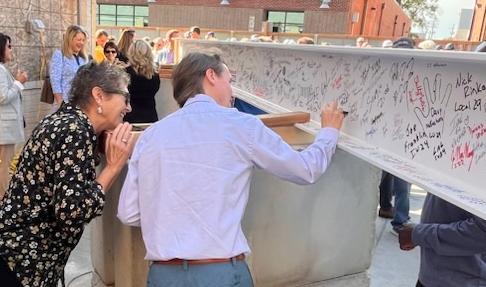
Once complete, the Wichita Biomedical Campus will combine the College of Health Professions’ School of Health Sciences, Speech-Language-Hearing Clinic, Ascension Via Christi – Wichita State University School of Nursing, WSU Tech’s Health Professions programs and the Wichita campuses of KU School of Medicine and KU School of Pharmacy into one location.
This collaborative project represents a significant investment in the future of healthcare and will transform healthcare education, research, and innovation across Kansas.
Ascension Via Christi names School of Nursing at Wichita State
Wichita State University announced the naming of the Ascension Via Christi — Wichita State University School of Nursing, reflecting a decades-long partnership between the university and one of Kansas’ leading health care providers. The new name took effect in fall 2025.
The naming reflects Ascension Via Christi’s investment in the Wichita Biomedical Campus, a transformative project that will redefine health care education in Kansas by strengthening collaboration across disciplines and supporting interprofessional health care learning.
 This partnership directly addresses the critical need for a strong, sustainable nursing
talent pipeline at all levels of education and practice. The naming elevates Wichita
State’s national profile, positioning it alongside other leading universities, while
recognizing Ascension Via Christi’s role as both a major employer and key clinical
training partner in preparing the region’s health care workforce — providing a lasting
connection to the next generation of talent.
This partnership directly addresses the critical need for a strong, sustainable nursing
talent pipeline at all levels of education and practice. The naming elevates Wichita
State’s national profile, positioning it alongside other leading universities, while
recognizing Ascension Via Christi’s role as both a major employer and key clinical
training partner in preparing the region’s health care workforce — providing a lasting
connection to the next generation of talent.
The state-of-the-art Wichita Biomedical Campus will anchor the south end of Wichita’s Biomedical Corridor and Via Christi St. Francis at the north, establishing a lasting pathway from classroom to the patient room.
College of Health Professions upgrades labs with state-of-the-art microscopes
The College of Health Professions continues to revolutionize its classroom and lab
experiences with the installation of brand-new microscopes in the Medical Laboratory
Sciences and Scientific Foundations Division facilities.
The new microscopes are a major upgrade, replacing dozens of older units with new equipment designed to prepare students for the future of biomedical education and research. The investment comes as the College prepares to move to the Wichita Biomedical Campus, positioning its programs with cutting-edge tools for a new level of education and research.
The Scientific Foundation Division’s histology lab now features 20 individual stations that are utilized by both undergraduate and graduate students as a central hub for developing skills of observation and analysis. This state-of-the-art lab is a major component of the foundation for success in health care and biomedical sciences.
In the Medical Laboratory Sciences program, the upgraded features digital microscopes with Wi-Fi connectivity and built-in high-resolution cameras. This technology allows live images from the microscope to be projected onto classroom screens, enabling students to collectively analyze specimens and share observations in real time.
With these upgrades, the College continues to lead the way in delivering innovative, hands-on education that prepares students to meet the evolving demands of modern healthcare.
College announces Certificate of Human Anatomy
The College of Health Professions has launched a new Certificate of Human Anatomy. The certificate provides a comprehensive education in human anatomy, progressing from foundational knowledge to clinical-level expertise.
 Students engage with high-tech simulation technology, anatomical models and real human
cadavers, which are vital tools for deepening their understanding of human anatomy.
Courses are taught in the College of Health Professions’ state-of-the-art Gross Anatomy
and Human Simulation laboratories. The certificate is particularly beneficial for
individuals interested in learning in depth about human anatomy or those planning
to apply to a health care-specific graduate program. It also serves as a valuable
credential for anyone seeking to enhance their qualifications in the field of health
care.
Students engage with high-tech simulation technology, anatomical models and real human
cadavers, which are vital tools for deepening their understanding of human anatomy.
Courses are taught in the College of Health Professions’ state-of-the-art Gross Anatomy
and Human Simulation laboratories. The certificate is particularly beneficial for
individuals interested in learning in depth about human anatomy or those planning
to apply to a health care-specific graduate program. It also serves as a valuable
credential for anyone seeking to enhance their qualifications in the field of health
care.
Classes began in spring 2025, and enrollment remains open. For more information or to enroll, visit wichita.edu/HumanAnatomyCertificate.
Pathway to Nursing program success
The Pathway to Nursing program in Manhattan continues to demonstrate strong growth and impact. Enrollment has steadily increased and is now at full capacity. In 2025, the program celebrated the graduation of its second cohort. The program is successfully fulfilling its mission to expand the nursing workforce and strengthen healthcare capacity across the region.
The Pathway to Nursing program is a unique dual degree program that offers students the opportunity to earn both a Bachelor of Science degree from Kansas State, and a Bachelor of Science degree in nursing from Wichita State. Both programs are located on the K-State campus in Manhattan.
Physical Therapy program expands access to care for children in rural communities
Access to physical therapy services in small towns can be limited, but with the help
of our Physical Therapy program, kids in rural communities are receiving much-needed care and making remarkable progress. Faculty in our Physical Therapy program actively partner with
school districts across the state to expand access to essential services for children,
while providing physical therapy students with hands‑on applied learning experience
in educational settings.
remarkable progress. Faculty in our Physical Therapy program actively partner with
school districts across the state to expand access to essential services for children,
while providing physical therapy students with hands‑on applied learning experience
in educational settings.
One standout example is Zoe, a child in Argonia with cerebral palsy. Zoe’s parents were pursuing the opportunity for Zoe to undergo selective dorsal rhizotomy surgery to improve her mobility, but a lack of available post‑surgery physical therapy in their area made it difficult to move forward. Thanks to WSU's growing partnership with Sumner County Educational Services Interlocal 619—which now supports more than 40 students—Zoe received much-needed care to prepare her for the procedure.
After more than a year of intensive physical therapy from WSU’s team, Zoe and her parents traveled to Houston and a successful selective dorsal rhizotomy surgery was completed. Since then, she has made significant gains in muscle control, strength, and speech. With continued rehabilitation support from Physical Therapy faculty members Audrey Garcia and Jennifer James, she grows more independent each day.
Zoe’s journey is a powerful reminder of what’s possible when care, persistence, and community come together. Read their inspiring story at https://foundation.wichita.edu/the-extra-mile/.
Blue Cross and Blue Shield of Kansas gifts $2.5 million to support Wichita Biomedical Campus and nursing scholarships
Our partners at Blue Cross and Blue Shield of Kansas have made a historic investment in the future of healthcare in Kansas with a $2.5 million contribution to the Wichita Biomedical Campus and scholarships for nursing students. $1.8 million is designated as the lead gift to the Wichita Biomedical Campus, and the remaining $700,000 established two endowed Blue Cross and Blue Shield of Kansas nursing scholarship programs in the College of Health Professions. This gift directly supports nursing students—fueling growth in programs such as the RN to BSN program.
RN to BSN Program Continues to Grow
Enrollment in the RN to BSN program has steadily increased over the past three years, reflecting strong interest from working nurses seeking a flexible and accessible path to advancing their education. The fully online format and flexible schedule remains some of the program’s greatest strengths, allowing nurses to balance coursework while continuing to work. Students can complete the program in as few as three semesters or take up to six years, offering a truly self‑paced experience that supports nurses at every stage of their careers. The curriculum places a strong emphasis on leadership development, preparing graduates to take on expanded roles and contribute more broadly to improving patient care.
“The RN to BSN scholarship from Blue Cross Blue Shield has helped ease the financial stress of going back to school while working. It allowed me to focus more on my classes and keep up with passing grades, even with my busy schedule. I’m really grateful for the support because it has made continuing my education much more manageable.” — Briseyda Lopez-Rodriguez, Blue Cross and Blue Shield of Kansas nursing scholarship recipient
“Receiving the RN to BSN scholarship from Blue Cross Blue Shield has made a meaningful difference in my ability to continue my education. As an RN in an OB/GYN clinic, I care for women across every stage of life, and advancing my education allows me to provide more comprehensive, evidence-based care to each patient I serve. This scholarship has eased the financial burden of returning to school and strengthened my ability to advocate for the women in my rural community.” — Karlee Dougherty, Blue Cross and Blue Shield of Kansas nursing scholarship recipient
College of Health Professions welcomes new associate dean for research, compliance and accreditation
 The College of Health Professions proudly welcomed Dr. Heather Henderson as the new
associate dean for research, compliance, and accreditation in 2025. In this role,
Dr. Henderson provides strategic oversight of research initiatives, regulatory compliance,
and accreditation processes.
The College of Health Professions proudly welcomed Dr. Heather Henderson as the new
associate dean for research, compliance, and accreditation in 2025. In this role,
Dr. Henderson provides strategic oversight of research initiatives, regulatory compliance,
and accreditation processes.
Dr. Henderson brings more than 20 years of experience in accreditation and program evaluation in higher education. Her expertise adds new capacity in areas such as strategic assessment, data-informed decision making, and long-term quality improvement to support individual health professions programs and college-wide growth. Through her leadership, the college is well positioned to advance its mission with purpose and measurable outcomes.
Dr. Henderson also serves as a tenure-track assistant professor in the Department of Public Health Sciences where she brings her expertise in organizational behavior, health education and promotion, and community engagement and outreach initiatives.
College of Health Professions donates microscopes to Wichita Public Schools

The College of Health Professions donated microscopes to Wichita Public Schools to support hands-on science learning in local classrooms. The donation helps provide students with valuable opportunities to explore scientific concepts and develop early interest in health and science careers. Through partnerships like this, the College continues to invest in education, build connections with the community, and support future generations of students.
Grant to bring new audiology equipment and labs to Wichita Biomedical Campus
The Wichita Biomedical Campus received a $1 million grant from the U.S. Economic Development Administration to purchase state-of-the-art audiology equipment. The grant will be matched by an additional $1 million in local funds.
The investment will support the Audiology and Speech-Language Pathology programs, enhance student training, and strengthen services provided through the Evelyn Hendren Cassat Speech-Language-Hearing Clinic. Funding will be used to purchase equipment such as audiology test booths, electrophysiology devices, vestibular and balance systems, simulation tools, and ultrasound imaging technology.
The grant will also support the development of new educational and clinical laboratories at the Wichita Biomedical Campus, expanding hands-on learning opportunities for students and improving care for individuals of all ages with communication challenges.
Physical Therapy program celebrates 50th anniversary
The Physical Therapy program marked its 50th anniversary with a series of celebratory events, including a clinical education seminar, Fun Run, golf tournament, and a social gathering for alumni, faculty, staff, students and supporters —complete with nostalgic throwback photos shared on social media.
The College of Health Professions continues to expand its research initiatives through joint projects with campus and industry partners. These efforts are advancing healthcare innovation and applied research, resulting in real‑world solutions that benefit our communities and strengthen the economy.
IRMAT ACTIVITIES
The Institute for Rehabilitation Medicine and Assistive Technology (IRMAT) is working on an exciting new project with Envision and the WSU Industry and Defense Programs. Together, the teams are developing an assistive device designed to enhance accessibility and improve quality of life for individuals with visual impairments. This work combines IRMAT’s engineering and clinical expertise with Envision’s understanding of the needs of people who are blind or low‑vision and has culminated in a $2.5 million grant proposal to the U.S. Department of Defense to study eye injuries sustained in combat. The project aims to develop improved strategies for prevention, diagnosis, and treatment of eye injuries during battle.
NEW RESEARCH OPPORTUNITIES
New research activities across the College are creating opportunities for faculty to engage in clinical research in ways that have not previously existed. This growth is already generating results. As CHP strengthens its research infrastructure, new industry partners are joining projects that directly impact patient care, technology development, and clinical practice. These developments are establishing the College’s role as a regional leader in clinical research and innovation.
Scholarly activity in the College has increased, with grant submissions reaching new heights and external funding secured for rural health startups and clinical projects. Faculty continue to explore technology‑driven research opportunities through Innovation Campus, including virtual reality applications, pediatric assistive technology, and new tools for athletic injury prevention and rehabilitation.

CHP programs are expanding clinical service partnerships to address workforce shortages and improve access to care across Kansas. Collaborations with Heartspring, school districts, community clinics, and local agencies are creating new opportunities for grant activity, applied research and student learning.
WSU’s Path to R1 Status
Wichita State University continues to advance toward its goal of achieving R1 status, the highest designation for research-intensive U.S. universities by the Carnegie Foundation. This elite classification recognizes institutions with specialized facilities and top-tier research.
 “Applied research initiatives in the College of Health Professions are playing a key role in
advancing Wichita State’s broader research mission and supporting its path to R1 status. Expanding research
activity through increased funding, scholarly output, and industry partnerships contributes
to the impact and visibility of WSU’s research enterprise. These efforts help position the university as a premier
urban public research institution.” — Pierre Harter, Associate Vice President for Research and Industry Engagement, Wichita
State University
“Applied research initiatives in the College of Health Professions are playing a key role in
advancing Wichita State’s broader research mission and supporting its path to R1 status. Expanding research
activity through increased funding, scholarly output, and industry partnerships contributes
to the impact and visibility of WSU’s research enterprise. These efforts help position the university as a premier
urban public research institution.” — Pierre Harter, Associate Vice President for Research and Industry Engagement, Wichita
State University
Industry plays a critical role in advancing intellectual property development across the university.

“Faculty in the College of Health Professions play a vital role in collaborating with industry partners to develop high value intellectual property and advance the commercialization of cutting-edge technologies. By tackling real world challenges, faculty can help solve meaningful industry problems today while simultaneously conducting deeper clinical research aimed at long term impact. Their subject matter expertise uniquely positions them to evaluate emerging health related technologies, identify opportunities for innovation, and guide the creation of protectable IP. This partnership-driven approach strengthens the innovation pipeline and accelerates the translation of research into practical solutions.” — Rob Gerlach, Associate Vice President, Tech Commercialization & Industry Engagement, Wichita State University
KCAH Hosts Statewide Retreat to Drive Data-Driven Health Innovation
In 2025 the Kansas Center for the Advancement of Healthcare (KCAH), a statewide collaborative managed through Wichita State and KU Medical Center, convened a pivotal retreat in Kansas City. Funded by the Kansas Health Foundation, the event marked a significant step toward achieving KCAH’s vision: to improve the health of all Kansans through data science.
The retreat brought together leaders and stakeholders from hospitals, higher education institutions, health-focused foundations, insurance and biotech industry leaders, government agencies, and national consultants. This cross-sector collaboration is at the heart of KCAH’s mission to advance healthcare by aligning expertise, sharing data, and driving systemic change through evidence-based approaches. Discussions focused on pressing healthcare challenges and innovative approaches to using health data analytics. Participants identified key priorities, including expanding data-sharing initiatives, supporting workforce development in health analytics, and launching pilot projects to transform healthcare delivery across the state.
KCAH is a groundbreaking collaborative designed to meet the need for a systematic, statewide approach to health data management and cutting-edge analytics across Kansas. By leveraging advanced data sciences and AI techniques, KCAH will support a wide range of healthcare activities—from generating new ideas and evaluating clinical practices, to disseminating information that leads to improved patient care and enhanced disease prevention at both individual and population levels. This transformative initiative has been in development since 2022, and the successful retreat marks a pivotal step forward.
The Wichita presence of KCAH will be in the Wichita Biomedical Campus building, with other KCAH locations across Kansas.
“For Kansas to lead the nation in health, groundbreaking efforts like KCAH must be launched and scaled. It’s not enough to just talk about health, Kansans need access to integrated data that unlock new pathways for improving health, lowering costs, and fostering well-being. It’s all about working smarter, not harder. Kansas once was considered one of the healthiest states in the nation. We can get back to that, but not without innovating how we work with data and how we collaborate. KCAH is forging new and important progress in that direction!” Ed O’Malley, President and CEO, Kansas Health Foundation
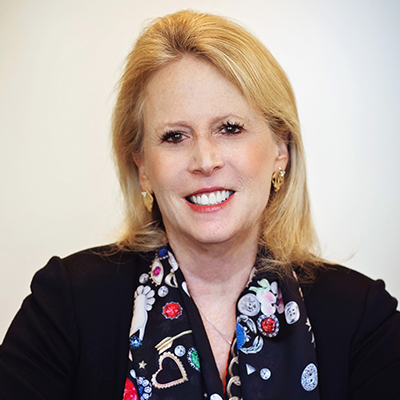
Jill Docking, KCAH Supporter Spotlight 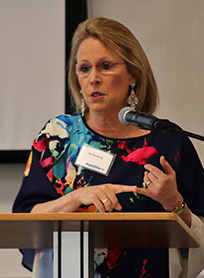
As a longtime civic leader and advocate for education and healthcare, Jill Docking has spent her life and career focused on service and shaping a stronger future for Kansas.
Docking’s professional path was not one she originally expected. Originally planning to pursue a PhD in English, she shifted to an MBA —a decision that led to a fulfilling career in financial advising, where she views her work as another form of teaching, helping people understand complex decisions and feel confident about their future.
Jill describes her greatest accomplishments rooted in family, while also contributing to efforts that create lasting impact for Kansans. That work has included advancing financial literacy in Kansas high schools, supporting higher education through difficult economic periods, and contributing to long-term health and healthcare initiatives across the state. She has played a role in major collaborative projects—from the creation of Camber, Wichita’s child psychiatric hospital, to supporting the establishment of a child psychiatry fellowship and the development of the Wichita Biomedical Campus. She emphasizes, “Each of these efforts reflects the work of many people coming together over time. Meaningful, lasting work takes time, requires collaboration, and is built by people working together across differences.
Her support for the KCAH stems from a core lesson reinforced throughout her career: we have to know where we are to know where we are going, and that begins with research and data. After learning Kansas once ranked last in the nation for mental health care access, she became committed to strengthening the systems that inform policy and practice. Jill sees KCAH as a catalyst for statewide alignment—connecting research, education, and practice to improve outcomes and close gaps across geography, income, and race. KCAH, she says, helps ensure that decisions about healthcare in Kansas are grounded in evidence, not assumption. One of the most encouraging signs for Jill has been the spirit of collaboration she sees among Kansas institutions, noting “We are simply stronger when we work together.”
Jill describes Wichita State as her hometown university and values its commitment to access and opportunity, particularly for first‑generation students. She has also worked closely with KU and other Kansas institutions, viewing them not as competitors but as shared investments in the future of our state.
Looking ahead, Jill believes Kansas is on the cusp of transformational change in health and healthcare. The Wichita Biomedical Campus represents years of collaboration and a much larger vision for the future of Kansas healthcare. Its true impact, she says, will come in the future when the investment translates into a stronger healthcare workforce, better outcomes, and a healthier Kansas.
“This is about more than buildings or programs. It’s about whether the next generation—our children and grandchildren—have the opportunity to thrive,” she says. “If we’re willing to think beyond ourselves, work together, and stay the course, Kansas can become a place where better health isn’t the exception—it’s the expectation.”
College of Health Professions welcomes Gore Scholars

Congratulations to the recipients of Wichita State's 2025 Harry Gore Memorial Scholarship. We are proud to have two of the three recipients joining the College of Health Professions:
- Beckett Sollars, Park Hill Senior High School — Nursing major
- Aidan Thibodeau, Herington High School — Health Science major
Each recipient of the prestigious Gore Scholarship receives $64,000 to attend Wichita State University. This honor reflects their exceptional achievement, hard work, and commitment to making a positive impact in their fields and communities. We look forward to supporting these students’ academic journeys and celebrating their future contributions to healthcare.
First student graduates from Licensed Mental Health Technician Pathway
The Ascension Via Christi – Wichita State University School of Nursing celebrated an important milestone in December 2025 with the graduation of the first student from the Licensed Mental Health Technician (LMHT) Pathway. This achievement marks a significant step forward for the program and reflects the College’s commitment to expanding access to careers in behavioral and mental health.
The LMHT pathway was developed to help address the growing need for skilled mental health professionals across the region. By providing students with targeted training and hands-on experience, the program prepares graduates to support individuals with mental health needs in a variety of clinical and community settings.
Medical Laboratory Sciences students win the 2025 Super Cell Bowl Championship
 Medical Laboratory Sciences (MLS) students earned top honors at the 2025 Super Cell
Bowl, a national hematology competition sponsored by the American Society of Clinical
Pathology (ASCP) and CellaVision. The event challenges students to accurately identify
30 cells in just one minute, testing both speed and precision. Nearly 60 Medical Laboratory
Technician and MLS programs from across the United States participated in this year’s
competition.
Medical Laboratory Sciences (MLS) students earned top honors at the 2025 Super Cell
Bowl, a national hematology competition sponsored by the American Society of Clinical
Pathology (ASCP) and CellaVision. The event challenges students to accurately identify
30 cells in just one minute, testing both speed and precision. Nearly 60 Medical Laboratory
Technician and MLS programs from across the United States participated in this year’s
competition.
Congratulations to the winners:
- Daniela Salcedo — earned first place with the fastest time of 28 seconds
- Derick Tejano — tied for second place with a time of 29 seconds
- Taryn Lessard — tied for second place with a time of 29 seconds
In recognition of their achievement, each student received an ASCP Board of Certification exam review book, access to an exam simulator and a certificate of participation to include on their professional resumes. The MLS program was also awarded a championship trophy and recognized nationally in Critical Values magazine.
HOSA Chapter continues to grow
The Wichita State HOSA chapter, established in 2023, continues to grow and create
meaningful opportunities for students interested in health professions. The chapter has expanded
its membership and strengthened its presence on campus, connecting students with valuable
resources, career exploration, professional development, and hands-on experiences.
opportunities for students interested in health professions. The chapter has expanded
its membership and strengthened its presence on campus, connecting students with valuable
resources, career exploration, professional development, and hands-on experiences.
Through meetings, workshops, and service activities, HOSA members gain exposure to a wide range of healthcare careers while building leadership and teamwork skills. Members are encouraged to participate in community service and outreach initiatives, making a positive impact while exploring their future professions. As the chapter continues to evolve, they remain focused on supporting student success and providing opportunities to the next generation of healthcare leaders.
The College of Health Professions celebrated a strong year of philanthropic support in fiscal year 2025. Generous support from our donors and partners demonstrated a continued investment in our students, facilities, programs, and the future of healthcare in Kansas.
CHP Fundraising Initiatives:
The WSU Foundation and Alumni Engagement team is actively working to support the Wichita Biomedical Campus (WBC), with a focus on:
- Securing funding for educational and clinical programs within the WBC.
- Completing construction of the Evelyn Hendren Cassat Speech-Language-Hearing Clinic.
Other key initiatives:
- Kansas Center for the Advancement of Healthcare (KCAH): Using advanced data science technology to expand disease prevention, enhance patient care, and decrease healthcare costs across the state.
- Institute for Rehabilitation Medicine and Assistive Technology (IRMAT): Establishing a cutting-edge research, development, and education hub dedicated to advancing rehabilitative medicine and developing new assistive technologies for patients with physical and cognitive disabilities.
- Licensed Mental Health Technician Pathway: supporting a new online academic opportunity that will address the growing need for mental health care professionals in Kansas.
- Dedicated Education Units (DEUs): Expanding training for nursing students to increase valuable, hands-on learning opportunities in clinical specialties.
SCHOLARSHIPS
The College of Health Professions and our students greatly appreciates each and every one of our supporters. Every gift, large or small, is important and contributes toward our mission to improve the health of our communities.
Here’s what some of our students are saying.
Ashley Bui, Physician Associate student 
Recipient of the Sue and Tim Nyberg Physician Associate Fellowship and Clayton H Shaw Fellowship
“PA school is both academically rigorous and highly demanding, and my scholarships have provided invaluable support during my clinical year. It has allowed me to focus fully on my education and professional growth as I refine my clinical skills. I am incredibly appreciative of this investment in my future and the opportunity it represents.”
Daniela Salcedo, Medical Laboratory Sciences 
Recipient of the Southcentral Pathology Scholarship
“Receiving the Southcentral Pathology Scholarship really was an honor. It allowed me to focus on school and my support groups, especially during my clinical rotation by lifting some of the financial weight of life while going to school off my shoulders. This is an outstanding opportunity for the great students of our MLS program thanks to Dr. Alderson!”
Kevin Truong, Dental Hygiene
Recipient of the Amy Hollingsworth Blasi Scholarship, Dr. Diane E Huntley Scholarship,
and Dr. Marquez J. Sams Scholarship 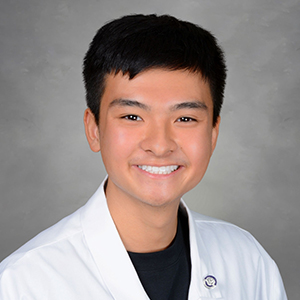
“Receiving these scholarships Amy Hollingsworth Blasi Scholarship, Dr. Diane E. Huntley Scholarship, and Dr. Marquez J. Sams Scholarship has been incredibly meaningful to my educational journey. These scholarships have not only eased the financial burden of my dental hygiene education but have also motivated me to continue striving for excellence and service within my community. I am deeply grateful for the support, as it allows me to focus on becoming a compassionate and impactful clinician.”
The College of Health Professions Dean’s Advisory Council (DAC) is a distinguished group of local and national academic, community and industry leaders. Their collective expertise, perspective and strategic counsel are instrumental in shaping the future of the College of Health Professions as we realize our vision of “Leading Change in High-Quality Healthcare Education.”
The DAC met in the spring and fall of 2025 to review progress across the college, examine trends and challenges in higher education and healthcare, and identify opportunities to strengthen CHP’s regional and national impact. Discussions focused on enrollment trends, research growth, the role of AI in clinical practice and education, and the transformative potential of the Wichita Biomedical Campus. Members also received updates on IRMAT and KCAH, both of which continue to expand partnerships and attract philanthropic support.
Meetings included presentations from university and college leadership, including representatives from the WSU Foundation and Alumni Engagement, the Assistant Vice President for
Research and Industry/Defense Programs, and the CHP Associate Dean for Research, Compliance
and Accreditation. A student panel also shared firsthand perspectives on the Wichita State experience, highlighting the importance
of student success as the college advances its strategic priorities.
representatives from the WSU Foundation and Alumni Engagement, the Assistant Vice President for
Research and Industry/Defense Programs, and the CHP Associate Dean for Research, Compliance
and Accreditation. A student panel also shared firsthand perspectives on the Wichita State experience, highlighting the importance
of student success as the college advances its strategic priorities.
2025 Membership
Joel Alderson - President, Southcentral Pathology
Pamela Clancy Ammar - Attorney, President of the Board-Kansas Humane Society, Chair of the CHP Dean’s Advisory Council (Jan.-April 2025)
Chad Austin - CEO, Kansas Hospital Association
Susan Butler - Global Head, Corporate Development and Strategy, Astrix Technology Group
Lou Celli - Vice President of Envision Dallas, Government Relations, and the Envision Research Institute
Jill Docking - Senior Vice President, RW Baird Private Wealth Management
Christine Faulk - Retired Physician / Former Associate Chief of Staff for Research at Dole VA Medical Center
Claudio Ferraro - Chief Operating Officer, Ascension Medical Group Via Christi, P.A.
Mark Finucane - Managing Director, Alvarez & Marsal Healthcare Industry Group, New York City
Jeff Fluhr - President, Greater Wichita Partnership
Mary Beth Jarvis - President and CEO of NXTUS, Inc.
Darin Kater - Vice President of Development, WSU Foundation/Alumni Engagement
Robert Kenagy - President and CEO, Stormont Vail Health
Laurie Labarca - Hospital President, Ascension Via Christi St. Francis, St. Teresa and Rehabilitation Hospitals
Jason Ladner - Business Development Executive, Blue Cross and Blue Shield of Kansas, Chair of the CHP Dean’s Advisory Council (April-Dec. 2025)
David Leslie - Chief Nursing Officer, Wesley Healthcare
Jay Moskowitz - James Buchanan Duke SmartState Chairman Emeritus for Healthcare
David Ramos - Emergency Medicine physician for Salinas Valley Memorial Healthcare System in Salinas, CA
Arthur Ross - Pediatric surgeon, former campus executive or Dean for four university based medical schools, academic medicine consultant
Dan Soliday - President and CEO, Heartspring
Christine Faulk has been appointed the new Chair of the Dean’s Advisory Council in 2026.
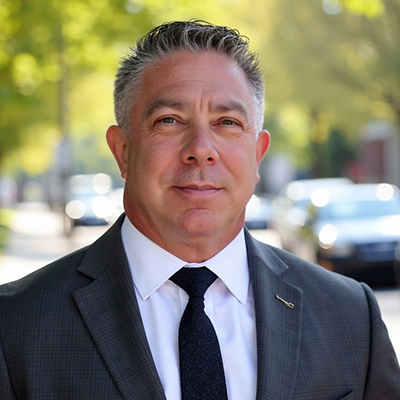

Our three patient-serving clinics continue to provide high quality, affordable health care to our community. All clinics are open to the general public and faculty, staff and students at Wichita State. In 2025, the Clinics served patients through more than 10,000 appointments.
Evelyn Hendren Cassat Speech-Language-Hearing Clinic
The Cassat Speech-Language-Hearing Clinic provides services to people across the lifespan
who have communication difficulties, including speaking, hearing, swallowing, and spoken
and written language impairments.
have communication difficulties, including speaking, hearing, swallowing, and spoken
and written language impairments.
- The clinic offers specialized programs and support groups for aphasia, autism, fluency, literacy, and more, along with children’s programs such as Fluency and Literacy summer camps.
- The clinic repairs and services most hearing aids, regardless of where they were purchased. It also offers replacement batteries for a wide range of hearing aid brands.
- Bronze winner of the Wichita Eagle’s Best of Wichita awards in the "Audiologist/Hearing Center" category.
Delta Dental of Kansas Foundation Dental Hygiene Clinic
The Dental Hygiene Clinic offers a wide range of low-cost preventative and therapeutic
services. 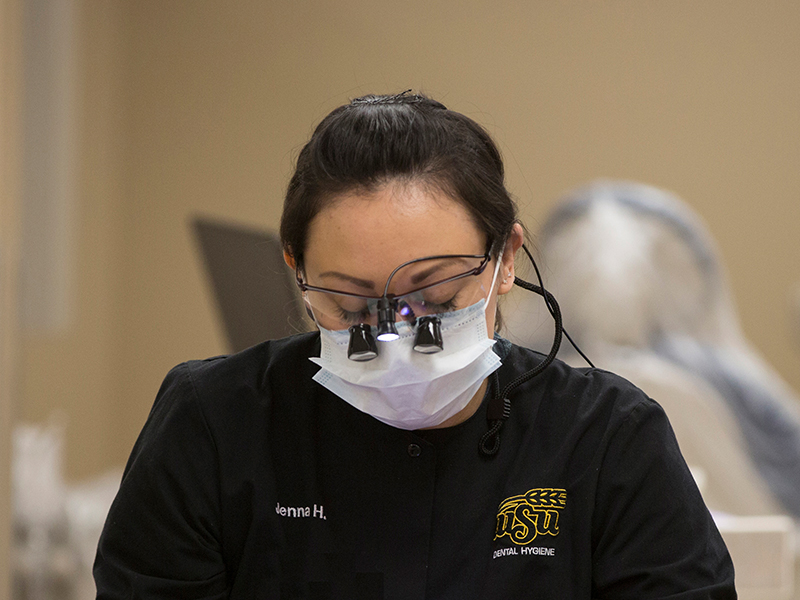
- Services include cleanings, dental sealants, X-rays, deep cleaning, fluoride treatments, personalized oral health education, and more.
- The clinic serves multiple communities, including children and underserved
populations. The cost of clinical care is scaled to serve underserved populations. - The clinic has 24 chairs and is Kansas’s largest dental hygiene clinic.
WSU General Dentistry
The WSU dental clinic provides a full range of services including cleanings, whitening,
fillings and implants, along with in-house specialists for periodontics, endodontics, oral
surgery and prosthetics.
and implants, along with in-house specialists for periodontics, endodontics, oral
surgery and prosthetics.
- The dental clinic is equipped with the latest technology to provide high-quality, efficient, and comfortable dental care: gentle, painless administration of anesthetic; digital X-rays that minimize radiation exposure; and same day dental crowns created right in the clinic.
- WSU students and their spouses and children are eligible for a dental discount program. This discount applies to all dental services, including cleanings, fillings, teeth whitening, dental implants and more.
In 2025, our exceptional faculty and staff received numerous accolades that highlight their dedication and contributions. Here are just a few of the well-deserved awards they earned throughout the year.