Naftzger Competition Dates
March 19-20, 2027
Naftzger Competition Information
Click the links below to learn more about competing, including rules and requirements.
Please feel free to send any questions to naftzgeryoungartists@wichita.edu.
Eligibility
-
The competition is open to students who are enrolled in and pursuing a degree at a
college, university, or conservatory in the United States.
-
The competition is held in four divisions:
-
Voice
-
Piano
-
Winds, Brass, and Percussion
-
String Instruments
-
Voice contestants must be at least 20 years old but not have reached their 29th birthday
as of March 19, 2027. Instrumental and Piano contestants must be at least 18 years old but not have reached
their 27th birthday as of March 19, 2027.
-
Previous Naftzger Young Artists Award winners are not eligible to compete.
-
Contestants must have a valid Social Security Number or appropriate International
Tax Identification Number at the time of the competition.
Schedule
-
Invited contestants will compete only within their division on Friday, March 19, 2027. Two contestants will be selected from each division to perform in the finals. If
necessary, Friday evening, March 19 or Saturday morning, March 20 will be used to complete the selection of finalists. The first round auditions are
open to the public at the discretion of the judges.
-
Specific audition times in the first round cannot be guaranteed; however, every effort
will be made to accommodate requests.
-
Finals will be Finals will be March 20, 2027 at 1 p.m. in Wiedemann Hall on the Wichita State University campus. Presentation of awards shall follow immediately. One person will be named the Naftzger
Young Artist Award winner and win $5,000. Three other division prizes will be awarded
at $2,000 each, and four division runner-up awards at $500 each.
Performance Requirements
Each contestant shall submit and be prepared to perform a recital program of approximately
45 minutes that demonstrates a variety of styles and repertoire from at least three
different centuries (i.e. 17th, 18th, 19th, 20th, and 21st) in accordance with the
following category specifics:
Piano / Instrumental
- At least one large-scale work, such as a sonata, suite, or other multi-movement work
by established composer.
- An assortment of other works that fulfill the performance requirements.
- Please provide movements and timings of each work to be performed.
Voice
- Two or more standard arias or works for voice and orchestra chosen from opera, oratorio,
or other works normally performed with orchestral accompaniment.
- A varied list of art songs, which must include at least one selection from 17th or
18th-century Italian song, German Lieder, French Mélodie, or contemporary art song.
- A minimum of three languages should be demonstrated in the chosen repertoire.
- Inclusion of repertoire from musical theatre or operetta is optional.
- Please provide the title of the opera or song cycle and timings of each selection.
Awards
Cash prizes totaling $13,000 will be awarded.
- Naftzger Young Artist Award: $5,000
- Three Naftzger Division Awards: $2,000
- Four Naftzger Division Runner-Up Awards: $500
Additional Details
-
Each contestant invited to Wichita shall appear at their own expense and furnish their
own accompanist.
-
All selections must be performed from memory when it is customary to do so. Please
bring one copy of your music for the adjudicators.
-
The selection of any and all winners and subsequent presentation of prizes is at the
sole discretion of the judges. Their decisions shall be final.
-
The Wichita State University School of Music reserves the right to make binding decisions
regarding contestant eligibility and conformity to regulations or their intent to
any situation not specifically covered by the above.
Application
-
Each contestant shall submit with their application an audio or video recording representative
of their current performance level. Recordings should not exceed 30 minutes in length.
The music performed on the recoding need not necessarily be the same as the music
submitted in the application for the actual auditions. Please email a link of the
recording to download or stream to naftzgeryoungartists@wichita.edu by February 20, 2027
-
Recordings will be used in preliminary judging to determine those invited to Wichita
for the semifinals and finals on March 19 and 20, 2027.
-
A non-refundable $50 entry fee is required with each application. Payment can be made by credit card through the
online application form.
-
Applications must be submitted by February 20, 2027.
-
Applicants will be notified of acceptance on or about February 26, 2027.
Apply Online
Judges

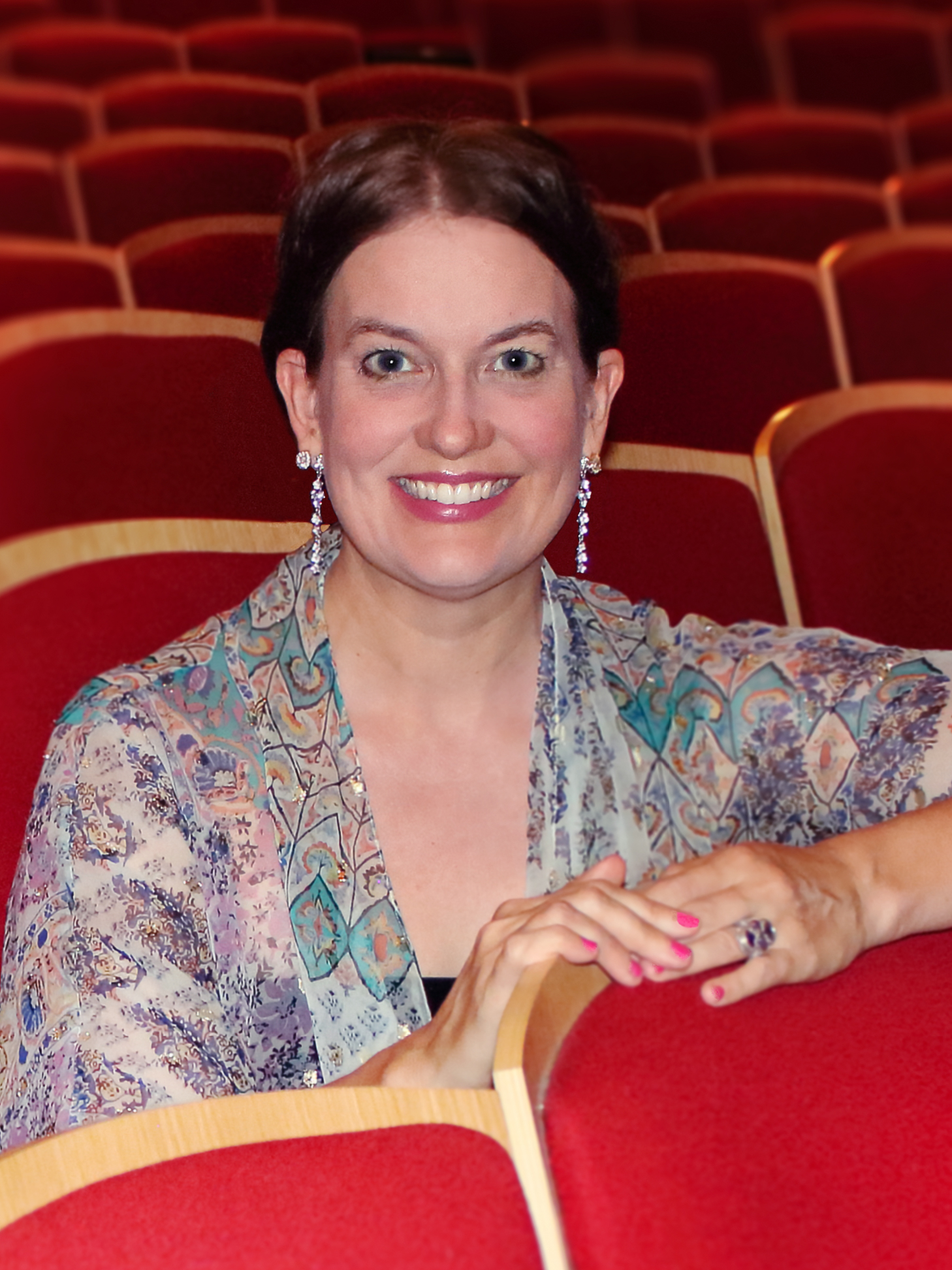
Molly Fillmore
Voice
Described by Gramophone as “a compelling interpreter”, Molly Fillmore made her Metropolitan
Opera debut as Helmwige in their production of Der Ring der Nibelungen. She returned
to the Met to sing a principal role in Satyagraha by Philip Glass. Both productions
were shown live in movie theaters around the world as part of the Met’s Live in HD
series as well as on PBS stations nationwide as part of their Great Performances series.
She can be heard and seen on the Grammy-winning Deutsche Grammophon recording of Die
Walküre from The Metropolitan Opera, as well as on the recordings of the Met’s production
of Satyagraha.
Her album, Bold Beauty – Songs of Juliana Hall, with faculty colleague Elvia Puccinelli,
features a song cycle (Cameos) for which Ms. Fillmore wrote the poems, called “vivid
glances” by Gramophone. The recording earned a designation of “Critic’s Choice” in
the March 2022 issue of Opera News. Her second album, Let us the fleeting hours enjoy!,
was released in early 2026 on the Navona label and contains musical works from Regency-era
England. Collaborators on that album include fellow UNT faculty and two of her former
studio members.
Molly Fillmore made her soprano debut in the title role of Salome at San Francisco
Opera. Other American opera appearances as a soloist include Seattle Opera, Spoleto
Festival, and Washington National Opera. She made her role debut as Marietta/Marie
in Die tote Stadt with Theater St. Gallen, Switzerland and sang the title roles in
Turandot and Tosca with the University of North Texas Symphony.
Before her switch to dramatic soprano repertoire, Molly Fillmore had an international
career as a mezzo-soprano, including five seasons as a principal soloist in the ensemble
of Oper der Stadt Köln (Cologne Opera), where she appeared in over twenty roles.
On the concert stage, Molly Fillmore has appeared as a soloist in an operatic concert
with the Boston Symphony Orchestra at Tanglewood, the Detroit Symphony, Utah Symphony,
Choral Arts Society of Washington, at Carnegie Hall, Avery Fisher Hall at Lincoln
Center, the Interlochen Arts Festival, Great Lakes Chamber Festival, and on DeustchlandFunk
Radio. Molly Fillmore has sung Samuel Barber’s Knoxville: Summer of 1915 and the Bachianas
Brasileiras of Villa-Lobos multiple times, and she has sung both the soprano and mezzo-soprano
parts of a favorite work, the Verdi Requiem, several times on professional stages.
Molly Fillmore made her solo operatic debut with the Washington National Opera at
the Kennedy Center Opera House while a junior at American University. By the time
she had completed her Master of Music degree, she had appeared in seven solo roles
(including a leading role in the zarzuela El Gato Montes) with the Washington National
Opera and as a soloist in numerous concerts at the Kennedy Center Concert Hall.
A native of northeast Ohio, she graduated magna cum laude with a B.A. in music from
American University and holds a Master of Music degree from The University of Maryland.
She taught voice at Michigan State University for ten years and, in 2014, joined
the faculty at the University of North Texas, where she holds the position of Professor
of Voice and Chair of the Division of Vocal Studies. For more information, visit www.molly-fillmore.com

TBA
Winds / Brass / Percussion

TBA
Strings

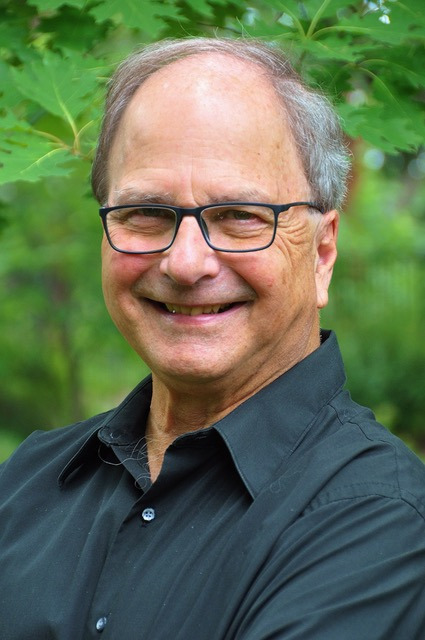
Dr. William David
Piano
After a distinguished forty-year career as a faculty member at Iowa State University
and founding member of the Ames Piano Quartet, William David retired and moved to
Colorado in 2012. Since his relocation he has performed with members of the Colorado
Symphony and faculty from Colorado State University, University of Denver, and the
University of Wyoming. David has also taught at the Lamont School of Music Summer
Academy at the University of Denver. He recently served as a judge at the Fischoff
National Chamber Music Competition. In the past four years, David has collaborated
with violist Basil Vendryes, principal violist in the Colorado Symphony, on four compact
discs for the Toccata label. All are also available on Apple Music and Spotify.
During his years at Iowa State, David’s primary performance focus was as member of
the Ames Piano Quartet. The APQ concertized throughout the United States and internationally
in Austria, France, Mexico, Taiwan, and South Africa. In January 2003 the Quartet
spent a week performing and teaching in Havana, Cuba, the first American chamber music
group to be invited there in over 40 years. They have recorded 15 critically acclaimed
CDs. The Dorian CD of the two Dvorak Piano Quartets was named “one of the chamber
music recordings of the century” by Fanfare magazine.
Also, a distinguished pedagogue, Dr. David served a semester as artist-in-residence
at National Taiwan Normal University in Taipei, the most prestigious music school
in the country.
Dr. David was promoted to the rank of University Professor in 2005. This title recognizes
faculty members who have had a significant impact on their departments and the university
during their careers at Iowa State.
David received the Doctor of Musical Arts degree summa cum laude in piano performance
from the University of Michigan. His major teachers there were Gyorgy Sandor and
Eugene Bossart.
Administration
The Naftzger Young Artists Auditions and Music Awards are administered by Wichita
State University's School of Music and are made possible by The Naftzger Fund for Fine Arts, Inc. Created by Mr. and Mrs. M.C. Naftzger in memory of L.S. Naftzger, Ida L. Naftzger, and Lee Southwell Naftzger II.