 Astronautics Laboratory
Astronautics Research and Education
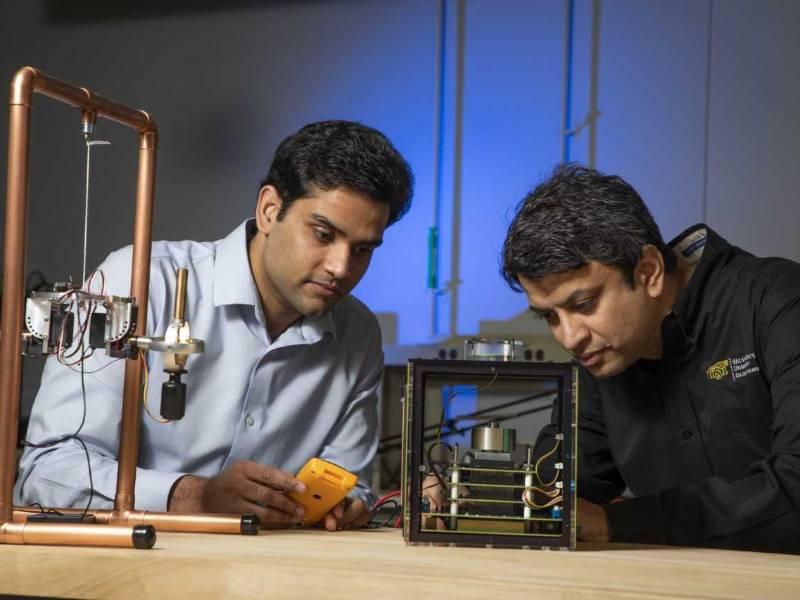
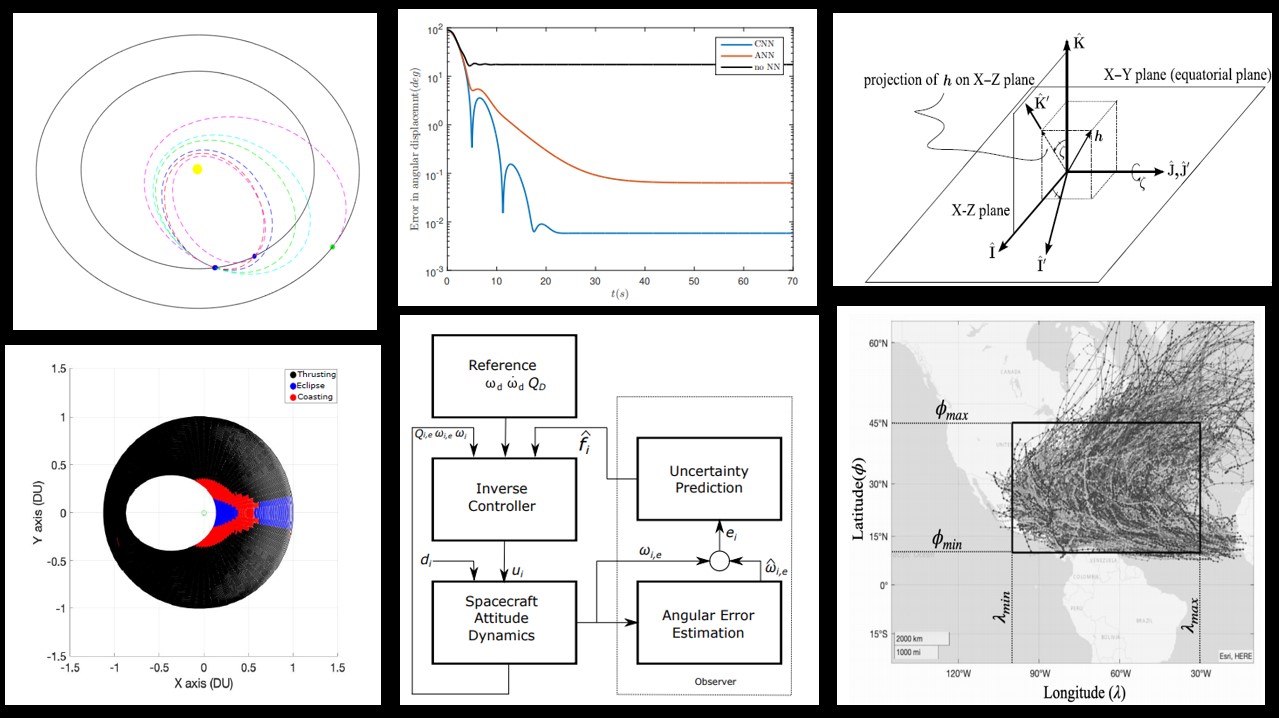
The Astronautics Laboratory conducts research in the area of astrodynamics, spacecraft control, and space mission design.
FACULTY
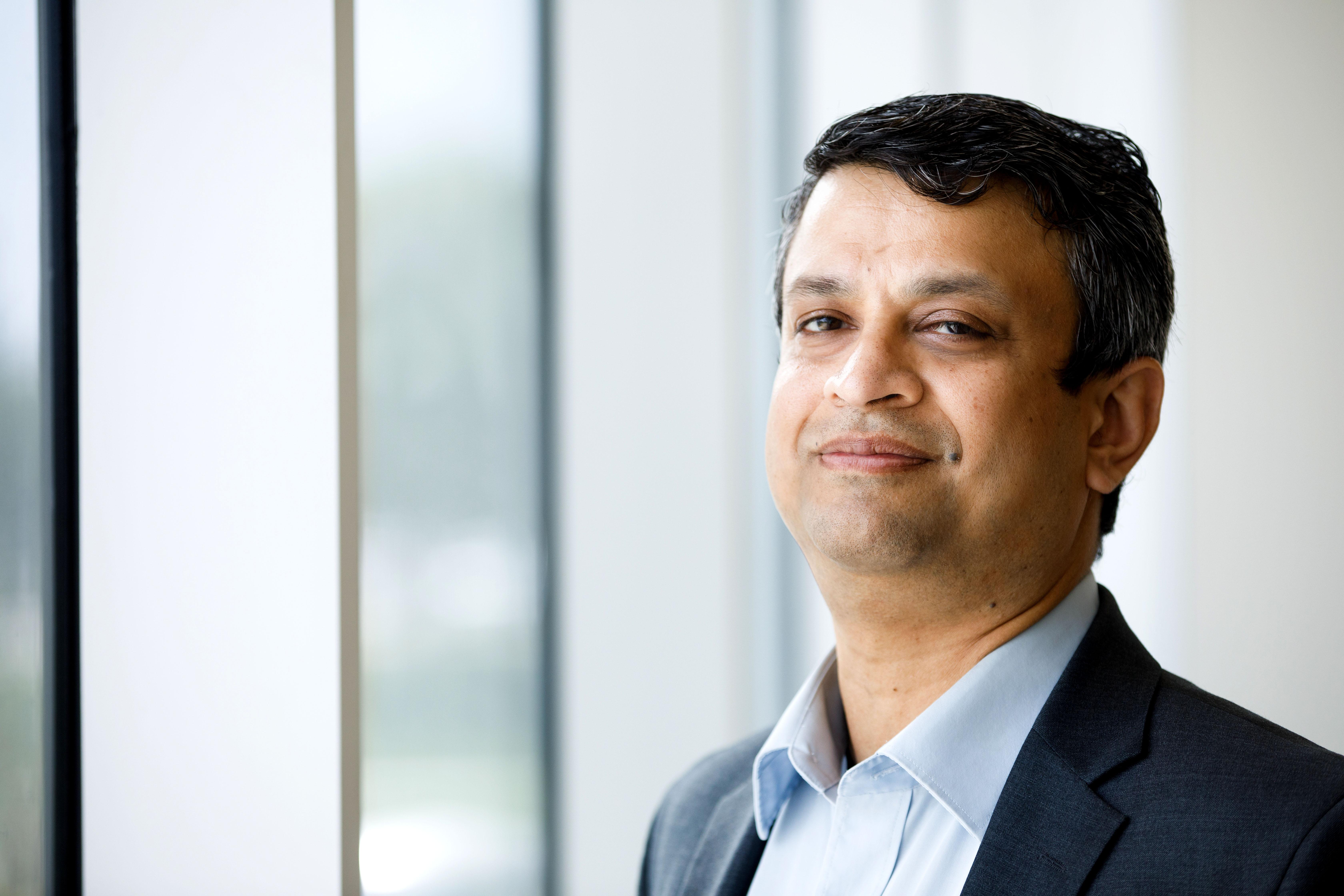
Atri Dutta is a professor of Aerospace Engineering, with research and teaching interests in the areas of astrodynamics, control theory, machine learning, mission design and optimization. His research projects have encompassed a variety of topics within astrodynamics: low-thrust trajectory optimization, mission design for in-space neutrino detection experiments, applications of artificial intelligence in spacecraft trajectory design, CubeSat constellation design, and multi-spacecraft maneuver planning. He is an affiliated faculty of WSU's Space Science Graduate Certificate Program. He serves as a Faculty Advisor of the WSU student organization Wichita State Rocket Club. During 2021-25, he also served as the director of Disaster Resilience and Analytics Center, one of WSU's convergent science teams. He is an Associate Fellow of American Institute of Aeronautics and Astronautics and serves on the Astrodynamics Technical Committee of the professional society.
DOCTORAL STUDENTS
Matthew Chace (MS 2025) is a new doctoral student working in the area of spacecraft autonomy and cybersecurity. He started his doctoral studies in June 2025.
MS STUDENTS
Logan Janes
Research interests: Nonlinear observer design
Julian Chee, Directed Project Option
Research interests: Rocket control
Davood Mazin
Research interests: Machine learning.
UNDERGRADUATE STUDENTS
Wren Porcaro, supporting SNAPPY mission operations.
DOCTORAL STUDENTS
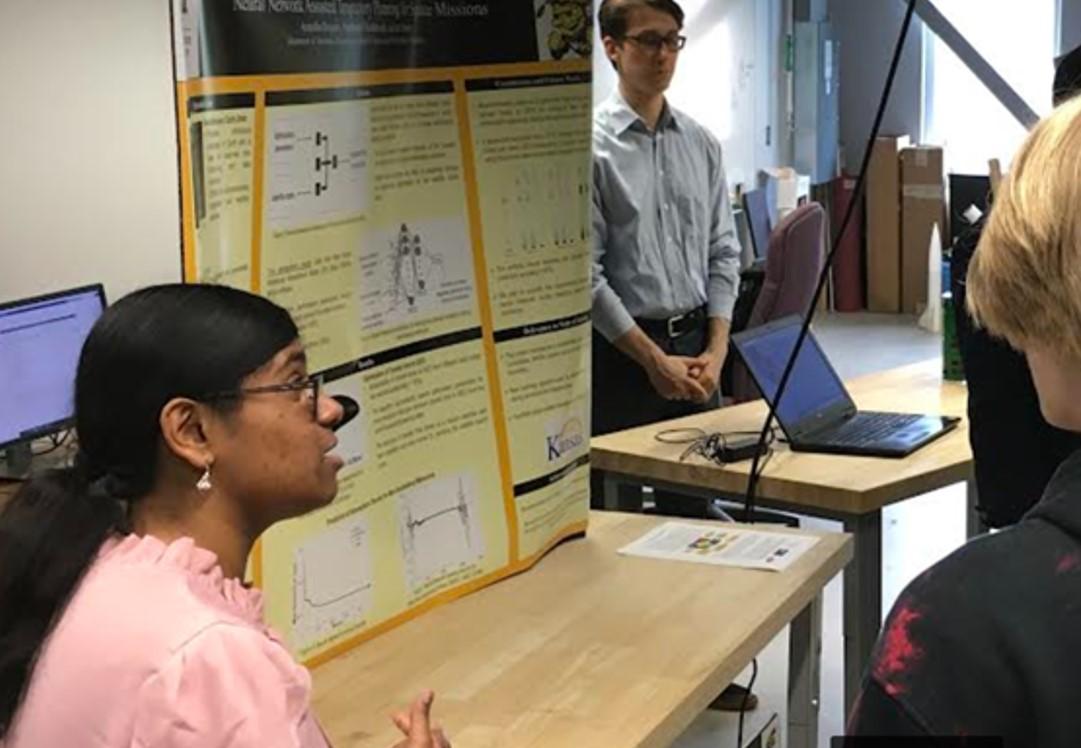
Dr. Amrutha Dasyam (PhD 2026) is a Ph.D. candidate investigating the impact of machine learning in the design of aerobraking trajectories. She completed her B.S. in Aerospace Engineering from WSU. Her academic and research performance has won her multiple recognition. She was the recipient of Bert L. Smith Outstanding Graduating Senior award in 2021 and was named runner-up for WSU Graduate Student of the Year (Doctoral) award in 2025. She also won a Student Travel Grant award from the organizing committee of American Control Conference, 2026. Her dissertation is entitled "Machine Learning-Based Atmospheric Density Modeling and Optimal Control Strategies for Aerobraking Maneuvers."
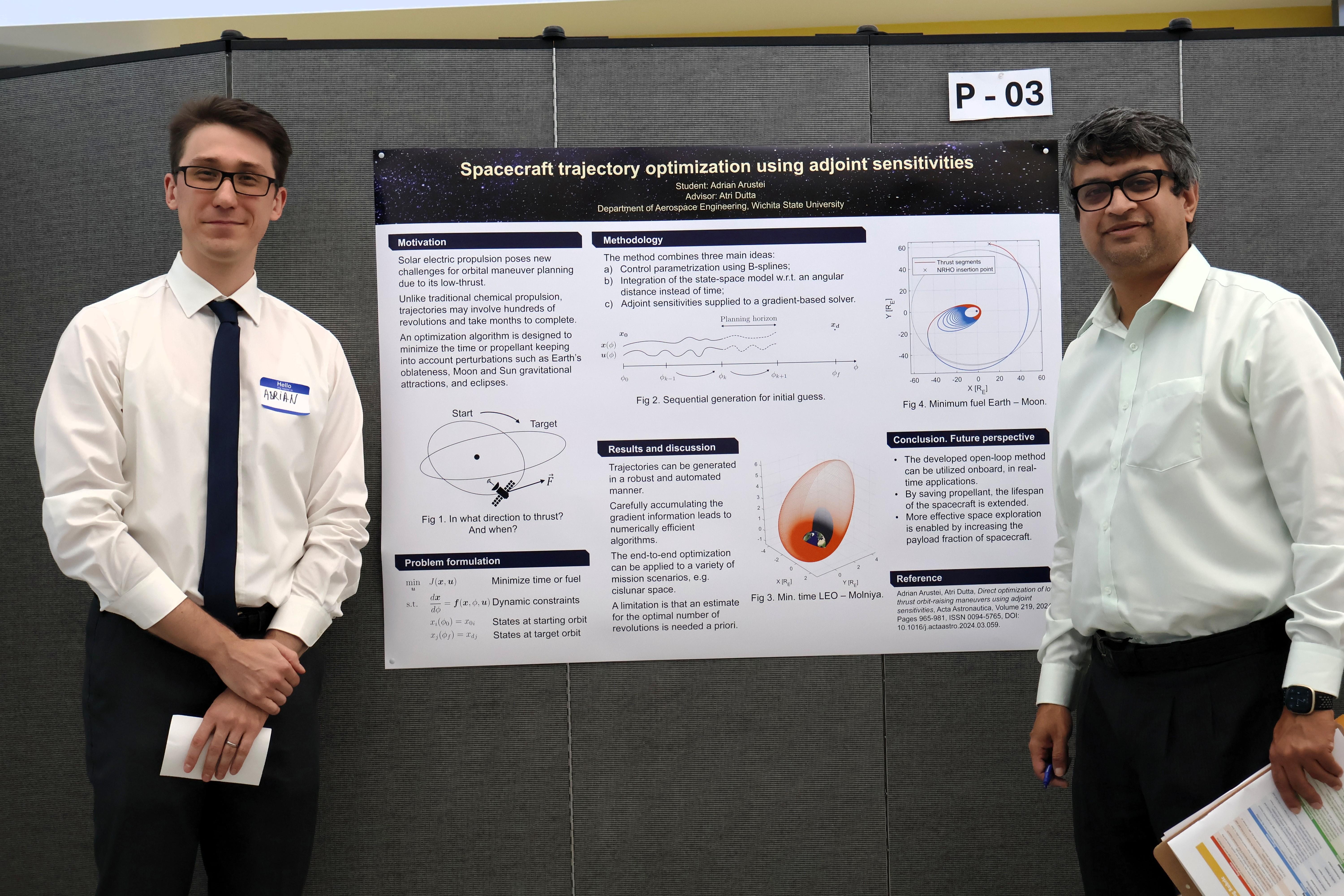
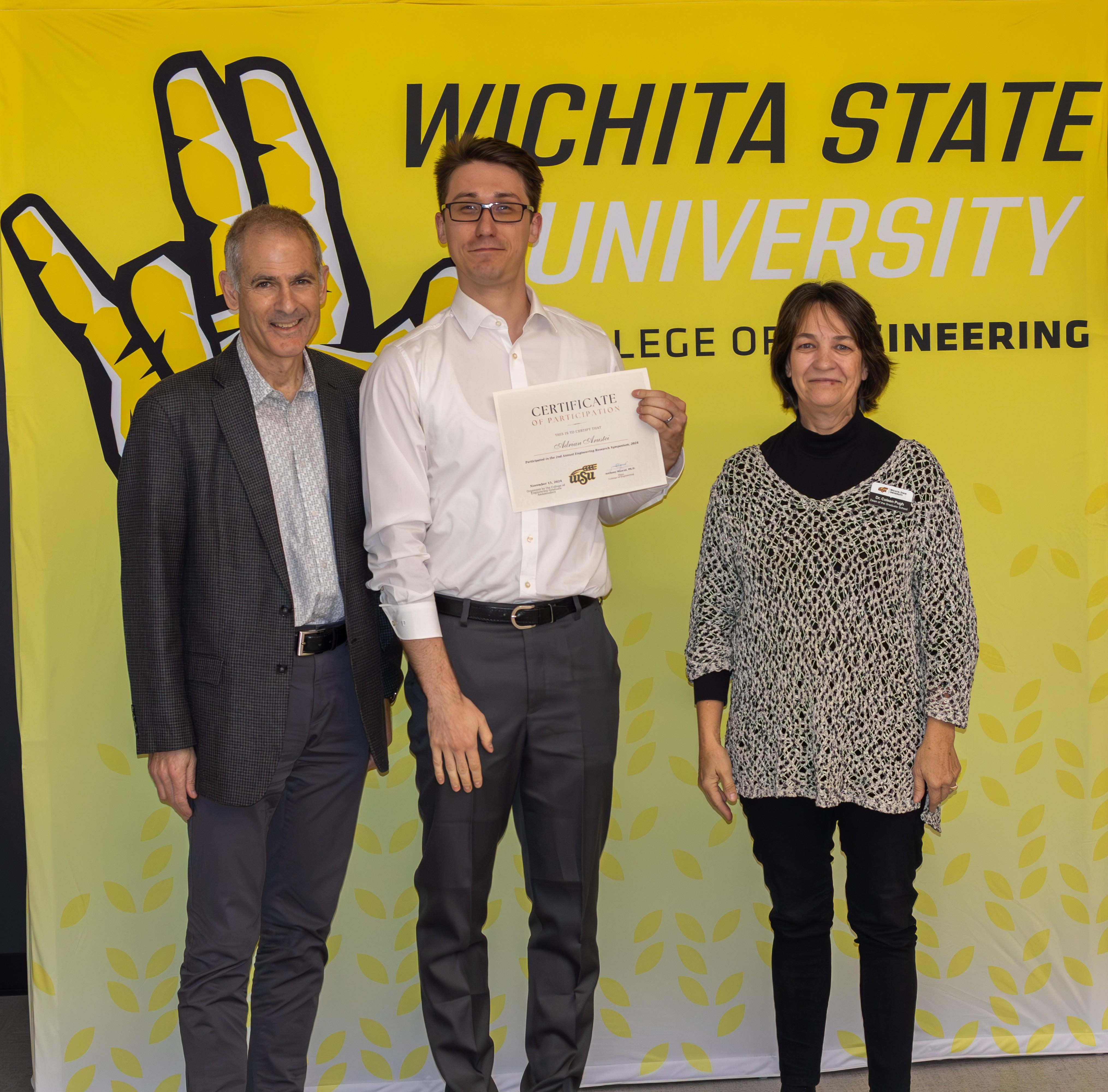
Dr. Adrian Arustei (PhD 2026) developed novel algorithms for optimizing low-thrust trajectories of spacecraft in cislunar space. He joined the laboratory in Fall 2021 and graduated in May 2026. He also was a teaching assistant. He holds a master's degree in aeronautical engineering from Linköping University, Sweden. His research interests are in optimal control and numerical methods with applications in astrodynamics. In the past years, Adrian collaborated with computer scientists from Kansas State University for enabling the development of deep reinforcement learning framework for low-thrust orbit-raising. His dissertation is entitled "Computational graph construction of adjoint sensitivities for low-thrust trajectory optimization and desensitized optimal control" and is available at the following link: https://soar.wichita.edu/entities/publication/b898b365-398c-44b0-bbd4-f2dae204f48a
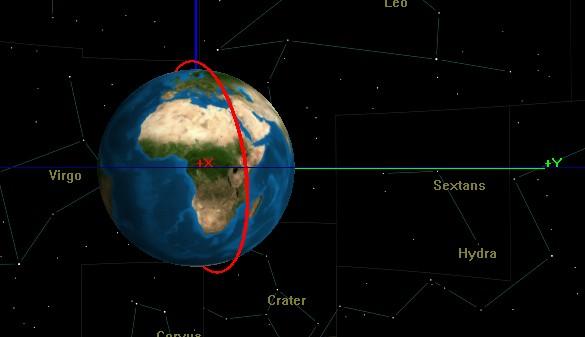
Dr. Kyle Messick (MS 2021, PhD 2025) was a Ph.D. student who worked on the design of the NuSol mission for flying a neutrino detector close to the Sun and that of the SNAPPY CubeSat mission for validating the performance of a neutrino detector prototype in low-Earth orbit. Additionally, he also investigated the design of spacecraft trajectories in cislunar space for a futuristic neutrino detection mission. During his graduate studies, Kyle was also a Pathways Student in the Navigation & Mission Design Branch at the NASA Goddard Space Flight Center (GSFC). At GSFC, he performed studies in trajectory design for servicing of the James Webb Space Telescope (JWST), Roman Space Telescope (RST), and the futuristic Habitable Worlds Observatory (HWO). He completed his M.S. in Aerospace Engineering from WSU, and his B.S. in Mechanical Engineering from University of Missouri. After graduation, he joined Advanced Space as an Astrodynamics and Satellite Navigation Engineer. His dissertation is entitled "Mission design & operations planning for in-space neutrino detection experiments" and is available at the following link: https://soar.wichita.edu/entities/publication/a1bc10fa-7494-438d-bf48-a8453272db52
Dr. Pardhasai Chadalavada (PhD 2022) was a Ph.D. student in the laboratory during 2018 - 2022. He was a NASA Future Investigator on a three-year grant, funded by NASA FINESST Program to investigate CubeSat constellation designs for monitoring of hurricanes from space. He obtained a MS from San Jose State University in 2017, and a Bachelors from SRM in 2014, all his degrees being in Aerospace Engineering. Apart from the hurricane monitoring related research, he has also contributed to the research being pursued in the laboratory related to optimization of low-thrust trajectory electric orbit-raising trajectories. After graduation, he joined Analytical Mechanical Associates (Hampton, VA) as a Flight Mechanics Engineer. His dissertation is entitled "Hybrid CubeSat constellation design for observing hurricanes" and is available at the following link: https://soar.wichita.edu/entities/publication/7ddbc9c9-3740-46d7-8326-f585190bfaff
Dr. Suwat Sreesawet (MS 2014, PhD 2018) was a graduate student working in the laboratory during 2014 - 2018. He was the winner of John V. Breakwell Graduate Student Travel Award from the American Astronautical Society in 2017, as well as Dora Wallace Hodgson Outstanding Graduate Student Award from WSU Graduate School. After graduation, he joined Geo-Informatics and Space Technology Development Agency (GISTDA), Thailand. His dissertation is entitled "Optimal orbit-raising and attitude control of all-electric satellites" and is available at the following link: https://soar.wichita.edu/handle/10057/15912
MASTERS THESIS STUDENTS
Matthew Chace, M.S. 2025, continued for Ph.D. at WSU.
Thesis: Machine Learning Based Predictions for Geocentric and Cislunar Low-thrust Orbit-Raising Maneuvers https://soar.wichita.edu/entities/publication/0de86db5-3d9d-4a77-9c7c-1b8be7760d76
Noah Johnson, M.S. 2025, working in the local aviation industry.
Thesis: An open-source tool for deesigning ballistic trajectories in the circular
restricted three-body problem https://soar.wichita.edu/entities/publication/b67a7a44-c64a-43d4-8579-28df77339351
Kyle Messick , M.S. 2021, continued for Ph.D. at WSU.
Thesis: Preliminary mission design for proposed NuSol probe https://soar.wichita.edu/handle/10057/21597
Tanzimul Farabi , M.S. 2021
Thesis: Neural network based prediction of solar array degradation during all-electric satellite deployment https://soar.wichita.edu/handle/10057/17586
Garba Subedi, M.S. 2020, joined Caterpillar as a Systems Engineer
Thesis: Neuroadaptive observer design for spacecraft attitude control and formation attitude synchronization https://soar.wichita.edu/handle/10057/19769
Nikolas Bascue, M.S. 2020
Thesis: Impact of launch injection errors on orbit-raising of all-electric satellites https://soar.wichita.edu/handle/10057/18981
Lakshay Arora, M.S. 2020, admitted to doctoral program at Carleton University (Canada)
Thesis: Reinforcement learning framework for spacecraft low-thrust orbit raising https://soar.wichita.edu/handle/10057/18826
Prathyusha Karampudi, M.S. 2019
Thesis: Laser ablation based on-orbit debris removal https://soar.wichita.edu/handle/10057/16551
Suwat Sreesawet, M.S. 2014, continued for PhD at WSU
Thesis: A new algorithm to generate low-thrust spacecraft trajectories https://soar.wichita.edu/handle/10057/11351
MASTERS DIRECTED PROJECT STUDENTS
Laura Elliott, M.S. 2024, Topic: Optimizing Cislunar Cycler Trajectory Design in the Elliptical Restricted Three-Body Problem, working in the local aircraft industry in Wichita.
Matthew Kornfeld, M.S. 2019, Topic: Comparison of approaches for powered descent and landing.
Zac Matson, MS. 2018, Topic: Effect of perturbing forces on continuous thrust orbit transfers of all-electric Earth satellites, working in the local aircraft industry in Wichita.
Biraj Gupta, M.S. 2017, Topic: Entry and exit positions and times in Earth’s shadow during electric orbit-raising, working in the local aircraft industry in Wichita.
Ajay Abraham, M.S. 2017, Topic: Collision avoidance with dynamic obstacles exhibiting periodic motion, working in the local aircraft industry in Wichita.
Tyler Olson, M.S. 2016, Topic: Analysis of geosynchronous transfer orbit radiation environment for low-thrust orbit-raising, joined Harris Corporation after graduation.
UNDERGRADUATE STUDENTS
Ella Kreger (2023–2025), investigated coverage provided by formation flying spacecraft.
Logan McClanahan (2025), conducted a literature survey on in-space manufacturing.
Marie Joselin Rodriguez-Ortiz (Summer 2025), analyzed orbital coverage maps.
Danial Siddiqui (Spring 2025), analyzed datasets for CubeSats in sun-synchronous orbits.
Emili Morales Camacho (Summer 2025), developed a hardware-in-the-loop simulation.
Judith Michel Martinez (2024), worked on Python-based orbit propagation.
Jose Michel-Cano (2023), worked on hardware implementation of control algorithms.
Andres Erives (Spring 2023), surveyed policies regarding on-orbit debris.
Alexis Silva (2022–), conducted research on orbital decay of debris.
Joseph Anglin (2022–2024), simulated three-body problem scenarios.
Nick Rodriguez (Summer 2022), analyzed constellations for wildfire monitoring.
Matthew Chace (2020–2022), GMAT simulations for cislunar mission design.
Alex Sterzing (Spring 2021), analyzed historical hurricane data for satellite remote sensing.
Ramses Young (2020–2021), simulated hybrid chemical-electric orbit-raising scenarios.
Shritha Jagadheeswaran (Summer 2020), conducted hardware-in-the-loop simulations.
Linda Harl (Summer 2020), conducted simulations solving Lambert’s problem.
Bryan Cline (2019–2020), analyzed effect of launch injection errors for all-electric satellites.
Dillon Whitmarsh (2019–2020), analyzed cost of a heliocentric space mission.
Shireen Fikree (2019–2020), conducted system engineering tests for nano-satellites.
Gaberial Booker (2018), surveyed manual stabilization for air bearing platform.
Skylar Dean (2017–2018), conducted simulations for a heliocentric mission design.
Brina Wallace (2018–19), conducted simulations related to spacecraft attitude dynamics.
Chimuka Cheepa (2018), analyzed attitude dynamics of an air bearing platform.
Samadini Weerasakera (2018), worked on a project on nanosatellite propulsion.
Nathan Lipsinki (2016–2017), analyzed satellite coverage.
Levi Mann (2016), conducted simulations related to satellite attitude determination.
Eric LaRue (2016), analyzed heliocentric segments of a dark matter detector mission.
Hooloomaan Ramdial (2016), analyzed planetary segment of a dark matter mission.
Ehiremen N. Omoarebun (2015–2016), conducted simulations for all-electric satellites.
Alexander Foster (2014–2015), analyzed radiation damage during low-thrust orbit-raising.
Christina Wilson (2014–2015), conducted maneuver planning experiments.
Alex Foster, 2014 - 2015, won second prize joined the local aircraft industry.
Nathan Templon (2014), conducted heliocentric mission analysis using gravity assists.
OTHERS
Akshay Tummala, 2016 - 2018, joined PhD in WSU Industrial and Manufacturing Engineering.
ASainath Vijayan, 2014 - 2016, joined Bastion Technologies.
American Control Conference Student Travel Grant, received by Amrutha Dasyam in 2026.
Dora Wallace Hodgson Outstanding Graduate Student Award, from WSU Graduate School, won by Adrian Arustei, 2025.
American Astronautical Society Student Travel Award, Astrodynamics Specilist Conference, won by Adrian Arustei in 2025.
Runner-up, Graduate Student of the Year – Doctoral in 2025 from WSU Student Engagement and Belonging, won by Amrutha Dasyam.
Grant award from Future Investigator Investigator in NASA Earth & Space Science and Technology program, won by Pardhasai Chadalavada, 2019.
John V. Breakwell Student Travel award from the American Astronautical Society, won by Suwat Sreesawet for his paper at AAS/AIAA Space Flight Mechanics Conference, 2017.
Dora Wallace Hodgson Outstanding Graduate Student Award from WSU Graduate School, won by Suwat Sreesawet, 2017.
Award for best poster presenters at Kansas Capitol Graduate Research Symposium won by Alex Foster, 2015.
First-place award (AIAA and AE) at WSU Engineering Open House awards, won jointly by Hooloomann Hommes Ramdial and Eric LaRue, 2016.
WSU Honors College Undergraduate Student Research Grant won by Chimuka Cheepa (2018), Brina Wallace (2017), Samadini Weerasekara Arachchilage (2017), Ehiremen Nathaniel Omoarebun (2015).
Second place award at WSU Undergraduate Research and Creative Activities Forum, won by Nathan Templon, 2014.
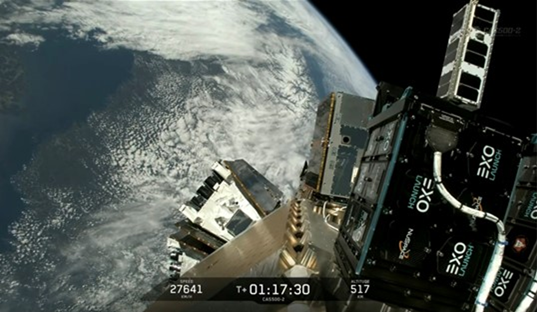
2026: The story of the launch of SNAPPY CubeSat was covered by Positively Kansas in their episode 1610, aired on PBS on July 17, 2026. https://www.pbs.org/video/positively-kansas-episode-1610-ntsheh/ It was also covered by WSU News, available at the following link: https://www.wichita.edu/about/wsunews/news/2026/04-april/launch_3.php
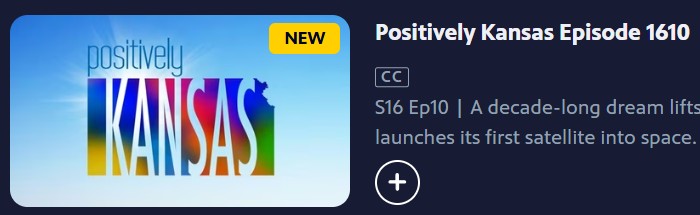
The story of the CubeSat launch was also covered in WSU News, available at the following link: https://www.wichita.edu/about/wsunews-releases/2026/04-april/launch_release_7.php
2025: PhD student Amrutha Dasyam was featured in WSU News in the article entitled "Not Just Rocket Science: Amrutha Dasyam Following Her Passion in Doctoral Research," which is available at the following link:
https://www.wichita.edu/student_life/careerdevelopment/ca_blog/Dasyam_Amrutha.php
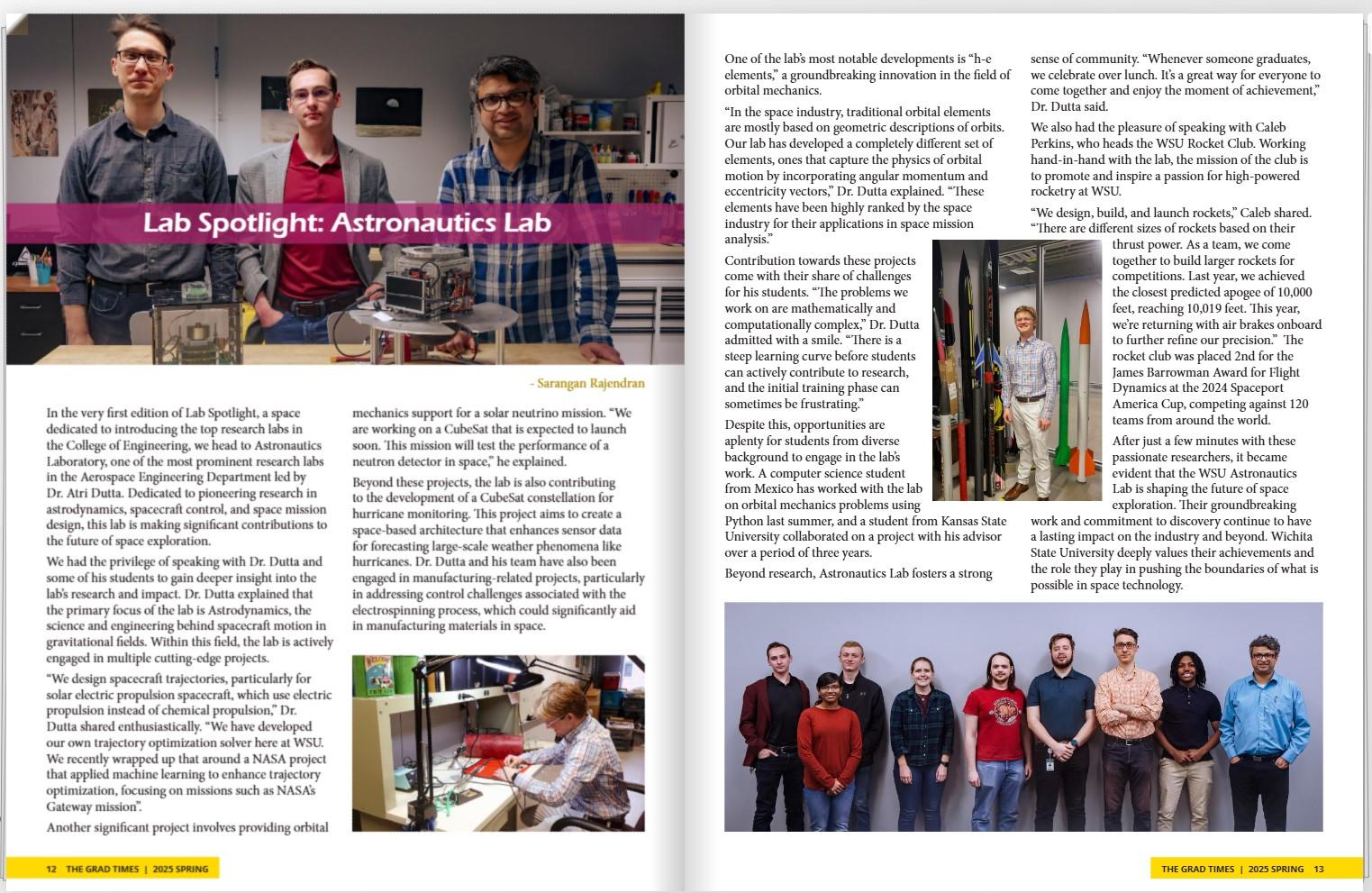
2025: WSU Astronautics Laboratory was featured in The Grad Times, Magazine for the Graduate Students of WSU College of Engineering, 2025. https://heyzine.com/flip-book/bcdabb2c5f.html#page/12
2021: New NASA project highlighted in the news article “Kansas Universities work on NASA AI project,” Ad Astra Kansas, Vol. 20, No. 1, 2021. https://adastra-ks.org/newsletters/pdf/AAKFnewsletterspring2021.pdf
2020: New graduate certificate program highlighted in the news article “WSU offers space science graduate program,” Ad Astra Kansas, Vol. 19, No. 1, 2020. https://www.adastra-ks.org/newsletters/pdf/AAKFnewsletterspring2020.pdf
2019: Pardhasai Chadalava's NASA grant was highlighted in WSU News article entitled "Aerospace engineering grad student receives grant from NASA," available at the following link: https://www.wichita.edu/about/wsunews/news/2019/08-aug/nasa_raincube_grant.php
JOURNAL ARTICLES
K. Messick, A. Dutta, H. Meyer, and N. Solomey, “Mission Analysis for an in-space solar
neutrino detection experiment,” in Acta Astronautica, Vol. 239, February 2026, Pages 420-
433. https://www.sciencedirect.com/science/article/abs/pii/S0094576525007805
S. M. T. Zaidi, A. Arustei, A. Munir and A. Dutta, “Single-Agent Attention Actor-Critic:
A Deep Reinforcement Learning-Based Solution for Low-Thrust Spacecraft Trajectory
Opti-
mization,” in IEEE Transactions on Aerospace and Electronic Systems, May 2025.
https://ieeexplore.ieee.org/document/11002711
A. Arustei, A. Dutta, “Direct Optimization of Low-Thrust Orbit-Raising Maneuvers using
Adjoint Sensitivities,” Acta Astronautica, Vol. 219, pp. 965-981, 2024.
https://www.sciencedirect.com/science/article/abs/pii/S009457652400184X
P. Chadalavada and A. Dutta, “Regional CubeSat Constellation Design to Monitor Hurri-
canes,” IEEE Transactions on Geoscience and Remote Sensing, vol. 60, pp. 1-8, 2022, Art
no. 1001608. doi: 10.1109/TGRS.2021.3124473
S. Sreesawet, A. Dutta, “Fast and Robust Computation of Low-Thrust Orbit-Raising Trajectories,” AIAA Journal of Guidance, Control and Dynamics, Vol 41, No 9, pp. 1888-1905. https://doi.org/10.2514/1.G003319
CONFERENCE PROCEEDINGS
A. Dasyam, A. Dutta, “Optimal Finite-Thrust Maneuver Augmentation for Aerobraking Mis-
sions,” American Control Conference, New Orleans, May 2026, AIAA 2024-0509.
P. Chadalavada, A. Dutta, “CubeSat Formations for Monitoring Hurricanes,” IEEE Aerospace
Conference, Big Sky, MT, Mar 2022, pp. 1-12. doi: 10.1109/AERO53065.2022.9843636.
NASA Science Mission Directorate (SMD): FINNEST program
NASA EPSCOR CAN program
NASA Space Technology Mission Directorate (STMD) NIAC program
Kansas NASA EPSCOR Program: Partnership Development Grant, Seed Research Initiative
AFRL, Information Institute: Visiting Faculty Research Program (VFRP), Extension grant to VFRP
WSU: College of Engineering Undergraduate Research Program, Honors College Undergraduate Research Grant
A. Dutta, “Overlapping Coverage Computation for Spacecraft Formation,” AAS/AIAA
Space Flight Mechanics Meeting, Kauai, HI, Jan 2025 (Poster).
A. Dutta, Z. Demissie, M. Alagic,“Data-Driven Hazard Detection and Prediction for
Disaster Risk Reduction,” NASA Accelerating Informatics for Earth Science, Jun 2024
(Invited Poster).
P. Chadalavada and A. Dutta, "CubeSat Constellation Design to Monitor Hurricanes over Southeastern Coastal Areas of the United States," AMS Annual Meeting, Jan 2021 (Virtual).
A. Dutta, "Optimization framework for spacecraft maneuver detection," Air Force Research Laboratory, Rome NY, Jul 2019 (Poster).
A. Dutta, "Optimal planning and detection of spacecraft maneuvers," Armed Forces Communications and Electronics Association (AFCEA) Erie Canal Chapter
C4I and
Cyber Technology Symposium, Utica NY, Jun 2018 (Poster).
A. Foster, S. Sreesawet, S. Vijayan, A. Dutta, "Methods for Optimizing Trajectories of All-Electric Satellites for Multiple Variables and Launch Conditions," presented by Alexander Foster at Kansas Capitol Graduate Research Symposium, Topeka KS, Feb 2015.
Guest lecture on “Tales of astronautics from the Air Capital of the World,” Shocker Science Conversations, Wichita State University, Feb 2025.
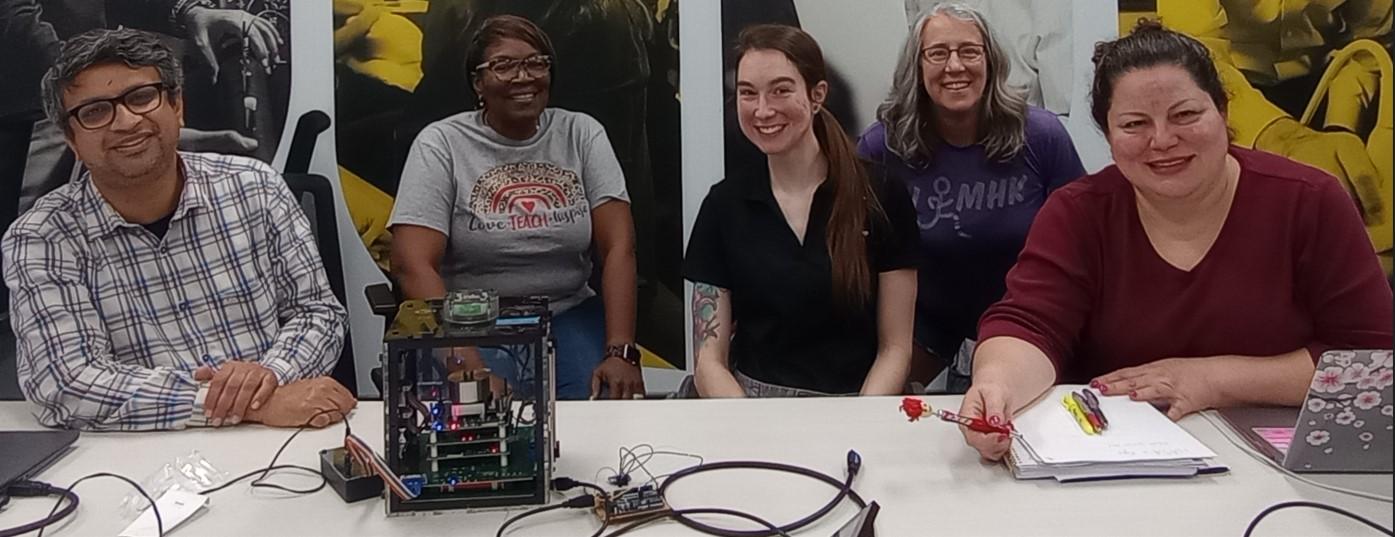
Five-day workshop (mornings only) in 2024 for Wichita-area high school teachers for
incorporation of astronautics-relevant topics in high-school curriculum, 2024; attended
by
four teachers. https://www.wichita.edu/academics/engineering/aerospace/research/astronautics-lab/outreach1.php
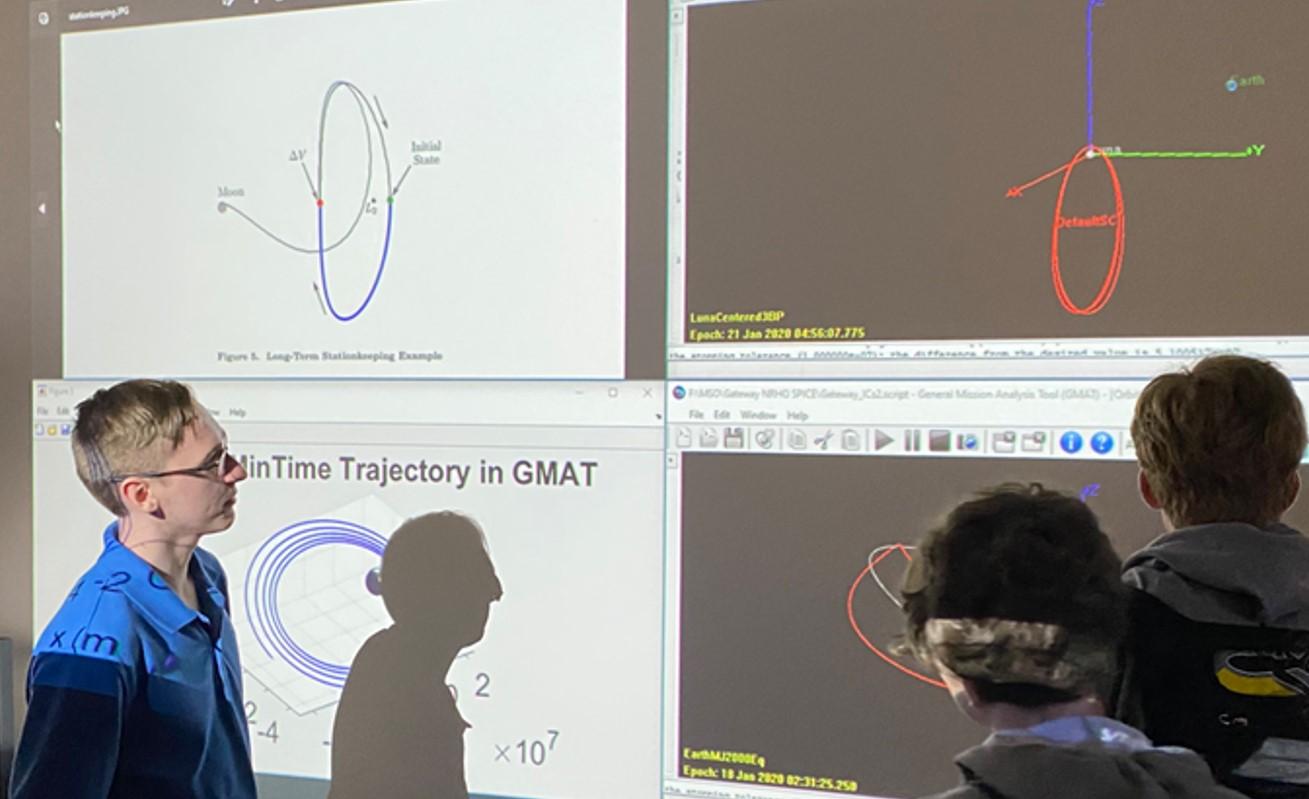
Five-day workshop (mornings only) in 2024 for providing astrodynamics-related
experience to Wichita-area high-school students; attended by six students. https://www.wichita.edu/academics/engineering/aerospace/research/astronautics-lab/outreach2.php
Five-day astronautics summer camp for high-school students from Kansas, 2022;
attended by nine students.
Guest lecture on “How to fly a spacecraft?” AIAA Wichita Student Branch,
Wichita KS, 2023; also given earlier to Wichita Space Initiative, Wichita KS, 2019.
Half-day mini-camp on astronautics as part of a larger aerospace engineering
camp for high-school students, 2018.