

Editing a Course
This is for when you want to make some basic edits to a course such as prerequisites, course description, credit hours, title, etc. Please Note: Cross-listed pairs or groups are maintained on one CIM form. To make edits to all cross-listed courses at once, search for any of the courses in the pair or group. The same proposal form will appear no matter which course you search for and select.
Accessing the Dashboard
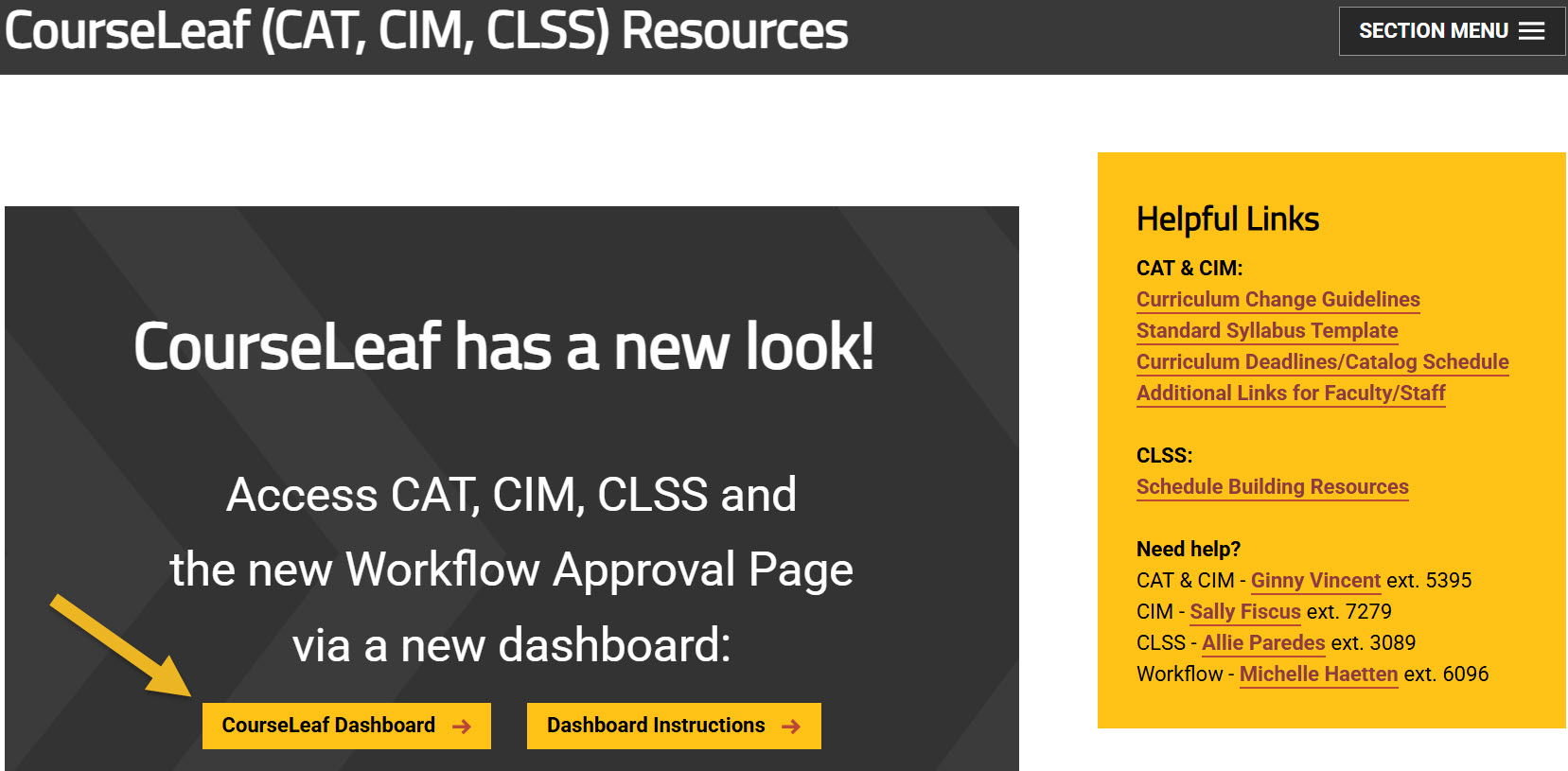
Using any web browser except Internet Explorer, go to the CourseLeaf (CAT, CIM, CLSS) Resources page (https://wichita.edu/courseleaf) and click the gold CourseLeaf Dashboard button link:
Accessing Course Inventory Management
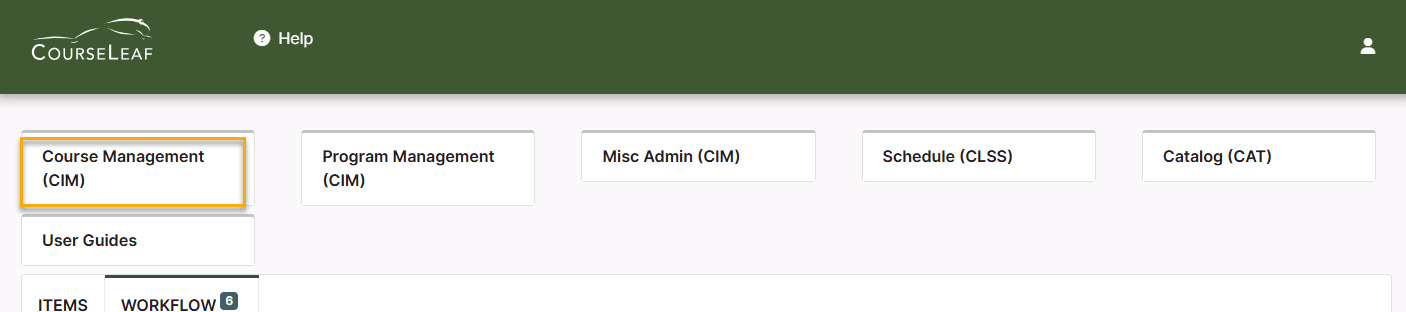
Once in the Dashboard, click on the Course Management (CIM) Module Card to be taken to the Course Inventory Management system.
Editing a Course Steps
Step 1: Finding Course to Edit
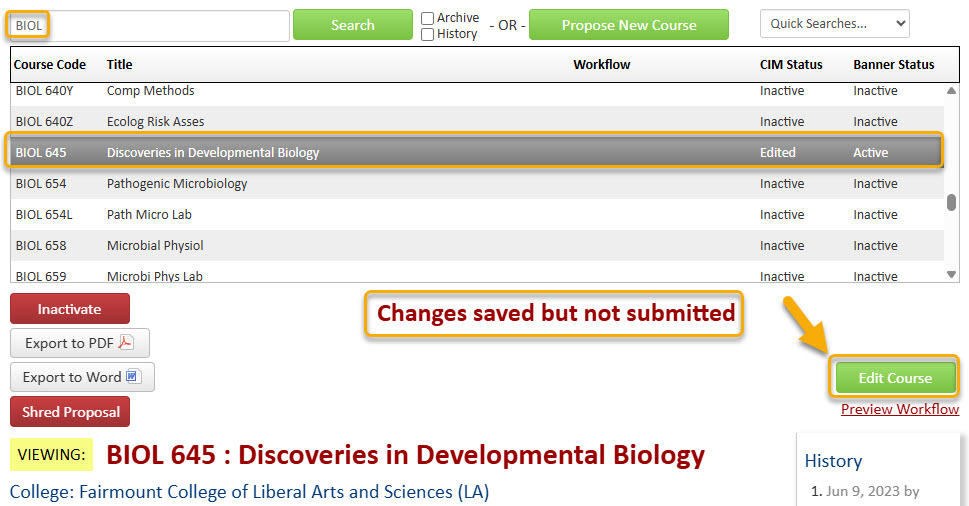
In the Course Inventory Management system, search for the course you want to edit. In the search field, type in the subject and number of the course (i.e. HIST 101) or you can search for all courses within a subject. You can also use asterisks to search for all courses that contain specific words in the course code or title.
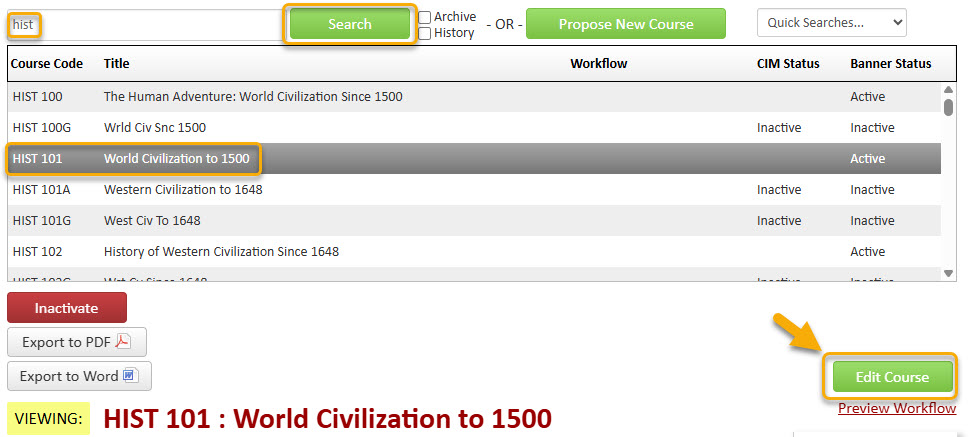
Once you have found the course you wish to edit, click on it to select it and then
click on the green ‘Edit Course’ button. This will open a separate window for the course proposal.
Step 2: Contact and Action Information
Fill out the contact information with the faculty member that can answer questions about this course. (Administrative assistants may be the one creating the proposal but the faculty member that requested this should be listed as the contact person.)
Check all actions that apply to your planned changes. You can select more than one action.
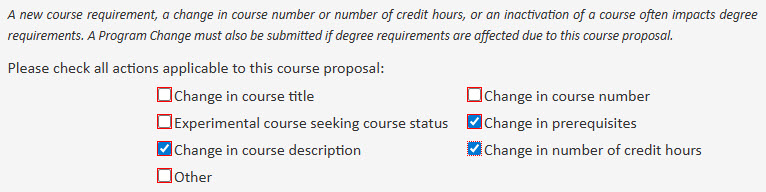
Please Note: Certain course changes may affect other courses or programs in such a way that would require those courses and/or programs to be updated as well. Here is an explanation of what course changes may or may not prompt other changes:
- Experimental course seeking course status:
- Since this action also requires a change in the course number, any other courses and/or programs that reference the edited course will need to be updated as well.
- Change in course description:
- This action doesn’t affect any other courses and/or programs.
- Change in course title:
- This action doesn’t affect any other courses. Programs referencing this course will automatically update the course title once the change is fully approved. No manual program update is needed.
- Change in course number:
- This action will affect any courses and/or programs that reference the edited course. Courses that use the edited course as a pre- or co-requisite will need to be updated and sent through workflow. Programs that reference the edited course will also need to be updated with the new course number and sent through workflow.
- Change in prerequisites:
- This action doesn’t affect any other courses and/or programs.
- Change in number of credit hours:
- This action doesn’t affect any other courses. This action may affect any programs that reference the edited course. If the edited course is listed on the program as an elective and therefore the change in credit hours does not affect the overall required credit hours of the program, then no program change is needed. However, if the edited course is a required course in a program, then the program will need to be updated and sent through workflow to account for the change in credit hours.
- Some Other Actions:
- Changing a course’s subject code is similar to changing the course number. This action will affect any courses and/or programs that reference the edited course. And so, those affected courses and programs will need to be updated and sent through workflow.
How to Identify What Courses and Programs Reference Edited Course
Every course has a CIM Ecosystem that shows courses, programs, and catalog pages that reference the course being viewed. The Ecosystem is the first box when viewing a course in the Course Inventory Management system (the screen where you search for courses). The Ecosystem is not viewable on the editable course proposal.
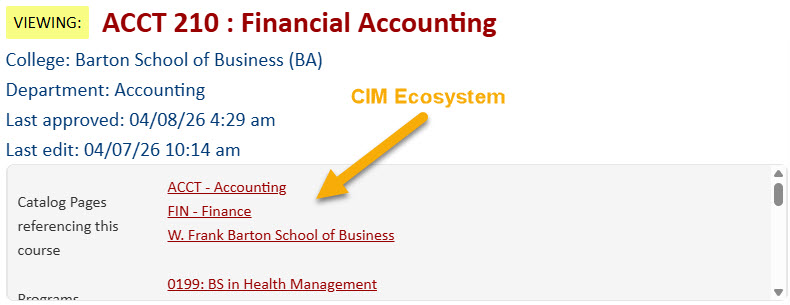
The Ecosystem will first show what catalog pages reference the course, usually the
course pages. If you scroll down, you can see what programs reference the course,
and what other courses use the course you are viewing as a pre- or co-requisite.


Helpful Information as you move through the form:
- Answers provided on this form affect the electronic workflow approval process. For example, checking the box for ‘New Course’ starts a different workflow than checking the box for ‘New Letter under Approved Root Course’. In addition, the workflow is constantly changing as you specify/change information. For example, selecting ‘Yes’ for ‘Does this course have a service-learning component’ adds the Service-Learning Coordinator to the approval process.
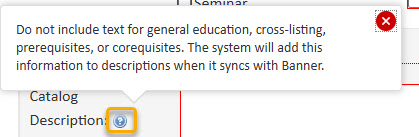
- Now that you are inside the proposal form the blue question marks represent WSU-specific
help:
- If you start a proposal but can’t finish it right now simply scroll to the bottom
of the form and click the ‘Save Changes’ button. When you are ready to return to this proposal you can use the same links
as above to access CIM. Then, search for the course, select it, and click the ‘Edit Course’ button:
Step 3: Making the Course Edits
Effective Term – Select a term for the change in course numbers. Please Note: Course changes can only be made for future terms where sections of the course do not already exist.
Most of the required fields on the form should already be filled out on the proposal. Review all of the information and make any edits as needed.
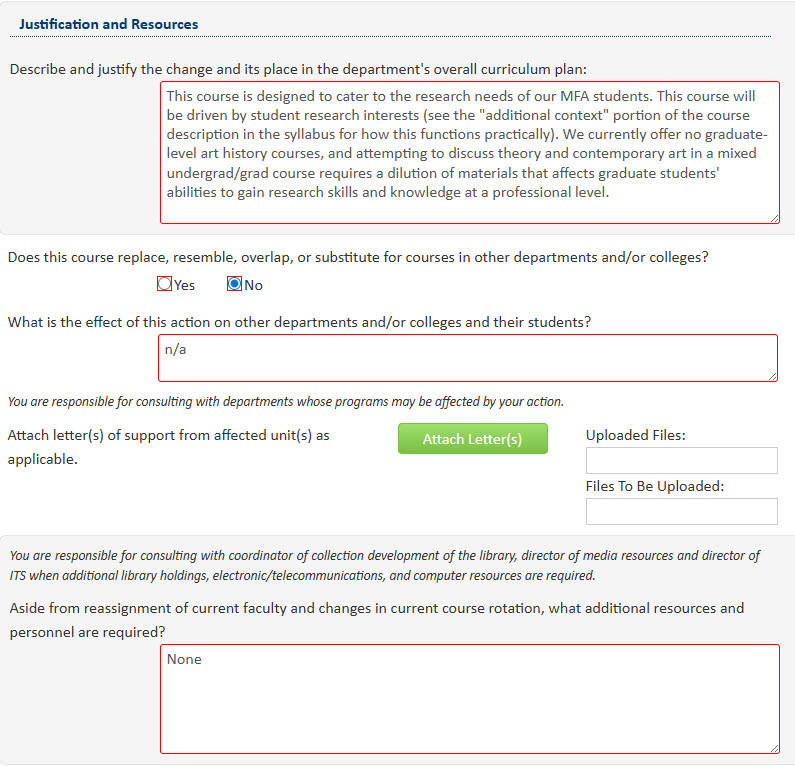
The Justification and Resources section will not be filled out. And so, you will need to explain what changes are being made and why and answer the questions as to how this course may affect other departments/colleges, faculty, and/or resources. Also, if any letter(s) of support are needed, attach them here.
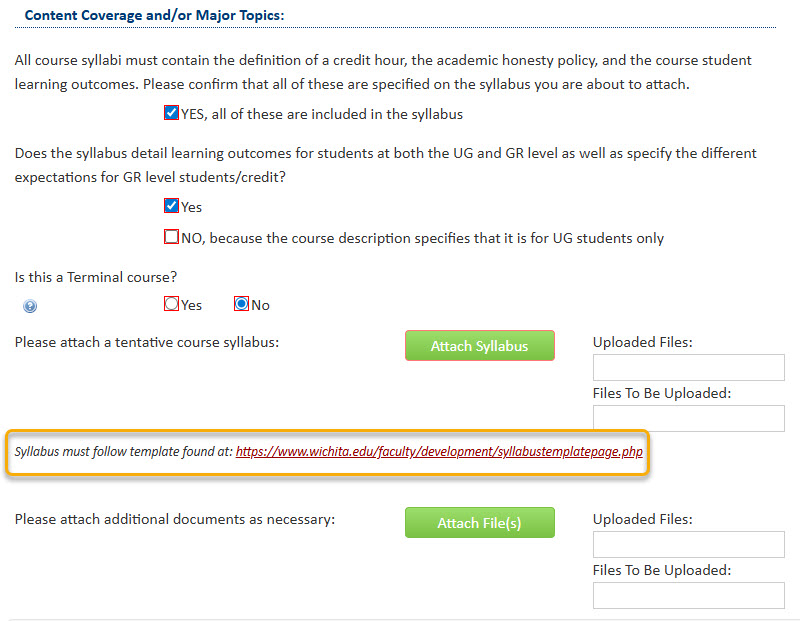
You will also need to attach an updated syllabus that follows the standard syllabus template. Please Note: The question concerning UG and GR level expectations will only appear on the form if the course number is 500-699. The Terminal course question will only appear on the form if the proposed course number is 500+.
Step 4: Start Workflow
Once you have reviewed, updated, and filled out the entire course proposal form, you will want to start the proposal through the electronic workflow approval process by clicking the green ‘Start Workflow’ button.
